Mycolactone

Mycolactone is a toxin produced by the bacteria Mycobacterium ulcerans, the causative agent of Buruli ulcer, a devastating skin disease that primarily affects individuals in West Africa, but has been reported in more than 30 countries. Mycolactone has unique immunosuppressive and cytotoxic properties, which contribute to the pathogenesis of the disease by damaging skin and soft tissue and inhibiting the immune response.
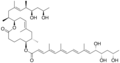
The structure of mycolactone consists of a core lactone ring with two fatty acid side chains, which are essential for its biological activity. The toxin is known to modulate several cellular pathways, leading to apoptosis (cell death), inhibition of cell proliferation, and suppression of immune system functions. This multifaceted mechanism of action makes mycolactone a subject of interest not only in the context of Buruli ulcer but also in the broader field of biomedical research, where it is studied for its potential therapeutic applications and as a tool to understand cellular processes.
Research into mycolactone has also highlighted its potential as a novel analgesic, due to its ability to block pain signals by targeting the sensory neurons responsible for pain perception. However, the use of mycolactone in clinical settings is limited by its cytotoxicity, and efforts are ongoing to modify the molecule to retain its beneficial properties while reducing its harmful effects.
The diagnosis of Buruli ulcer and the role of mycolactone in its pathogenesis are critical areas of research in the fight against this disease. Early detection and treatment are essential to prevent the extensive skin and soft tissue damage that can occur in advanced stages of the disease. Current treatment strategies focus on the use of antibiotics to kill Mycobacterium ulcerans and surgical intervention to remove necrotic tissue.
Efforts to develop a vaccine against Buruli ulcer are ongoing, with mycolactone being a key target for vaccine development due to its central role in the disease's pathogenesis. Understanding the complex interactions between mycolactone and the host immune system is crucial for the development of effective therapeutic and preventive strategies against Buruli ulcer.

-
 Mycolactone 2

Ad. Transform your life with W8MD's
GLP-1 weight loss injections special from $29.99 with insurance
|
WikiMD Medical Encyclopedia |
Medical Disclaimer: WikiMD is for informational purposes only and is not a substitute for professional medical advice. Content may be inaccurate or outdated and should not be used for diagnosis or treatment. Always consult your healthcare provider for medical decisions. Verify information with trusted sources such as CDC.gov and NIH.gov. By using this site, you agree that WikiMD is not liable for any outcomes related to its content. See full disclaimer.
Credits:Most images are courtesy of Wikimedia commons, and templates, categories Wikipedia, licensed under CC BY SA or similar.
Translate this page: - East Asian
中文,
日本,
한국어,
South Asian
हिन्दी,
தமிழ்,
తెలుగు,
Urdu,
ಕನ್ನಡ,
Southeast Asian
Indonesian,
Vietnamese,
Thai,
မြန်မာဘာသာ,
বাংলা
European
español,
Deutsch,
français,
Greek,
português do Brasil,
polski,
română,
русский,
Nederlands,
norsk,
svenska,
suomi,
Italian
Middle Eastern & African
عربى,
Turkish,
Persian,
Hebrew,
Afrikaans,
isiZulu,
Kiswahili,
Other
Bulgarian,
Hungarian,
Czech,
Swedish,
മലയാളം,
मराठी,
ਪੰਜਾਬੀ,
ગુજરાતી,
Portuguese,
Ukrainian
