Rentiapril
Rentiapril is a hypothetical angiotensin-converting enzyme (ACE) inhibitor used in the management of hypertension and heart failure. Like other ACE inhibitors, Rentiapril functions by blocking the conversion of angiotensin I to angiotensin II, a potent vasoconstrictor, thereby reducing blood pressure and alleviating the workload on the heart. This article provides a comprehensive overview of Rentiapril, including its mechanism of action, pharmacokinetics, clinical applications, adverse effects, and contraindications.
Mechanism of Action
Rentiapril inhibits the angiotensin-converting enzyme, which is responsible for the conversion of angiotensin I to angiotensin II. Angiotensin II is a powerful vasoconstrictor that also stimulates the release of aldosterone from the adrenal cortex, leading to water and sodium retention. By inhibiting the production of angiotensin II, Rentiapril decreases blood volume and vascular resistance, which in turn lowers blood pressure and reduces the heart's oxygen demand.
Pharmacokinetics
After oral administration, Rentiapril is rapidly absorbed from the gastrointestinal tract. It undergoes partial metabolism in the liver and is excreted primarily in the urine. The bioavailability of Rentiapril and its active metabolites contributes to its therapeutic effects. The onset of action typically occurs within one hour of administration, with peak effects observed within 4 to 6 hours. The duration of action for a single dose of Rentiapril can last up to 24 hours, making it suitable for once-daily dosing.
Clinical Applications
Rentiapril is indicated for the treatment of:
- Hypertension - to lower blood pressure and reduce the risk of cardiovascular events.
- Heart failure - to improve survival and reduce hospitalizations for patients with heart failure.
- Left ventricular dysfunction - to prevent the progression of heart failure in patients with asymptomatic ventricular dysfunction.
Adverse Effects
Common adverse effects of Rentiapril include:
- Cough
- Hyperkalemia
- Fatigue
- Dizziness
- Headache
Less common but more serious adverse effects may include:
- Angioedema
- Renal impairment
- Hypotension, especially after the first dose
Patients should be monitored for signs of angioedema and renal function should be assessed before and during treatment.
Contraindications
Rentiapril is contraindicated in patients with:
- A history of angioedema related to previous ACE inhibitor therapy
- Bilateral renal artery stenosis
- Hypersensitivity to Rentiapril or any component of the formulation
Drug Interactions
Rentiapril can interact with several other medications, including:
- Diuretics - may increase the risk of hypotension
- Potassium-sparing diuretics and potassium supplements - may increase the risk of hyperkalemia
- Nonsteroidal anti-inflammatory drugs (NSAIDs) - may reduce the antihypertensive effect of Rentiapril
Patients should inform their healthcare provider of all medications they are taking to avoid potential drug interactions.
Conclusion
Rentiapril is a valuable medication in the management of hypertension and heart failure. Its ability to inhibit the angiotensin-converting enzyme leads to reduced blood pressure and improved cardiac function. However, like all medications, it is associated with potential adverse effects and contraindications. Patients should be closely monitored to ensure the safe and effective use of Rentiapril.
 | This medical article is a stub. You can help Wikipedia by adding missing information. |
Rentiapril
-
 Rentiapril
 -
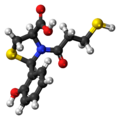 Rentiapril 3D ball


Ad. Transform your health with W8MD Weight Loss, Sleep & MedSpa

Tired of being overweight?
Special offer:
Budget GLP-1 weight loss medications
- Semaglutide starting from $29.99/week and up with insurance for visit of $59.99 and up per week self pay.
- Tirzepatide starting from $45.00/week and up (dose dependent) or $69.99/week and up self pay
✔ Same-week appointments, evenings & weekends ✔ Tele visits available with certain limitations Learn more:
- GLP-1 weight loss clinic NYC
- W8MD's NYC medical weight loss
- W8MD Philadelphia GLP-1 shots
- Philadelphia GLP-1 injections
- Affordable GLP-1 shots NYC
- Budget GLP-1 shots
|
WikiMD Medical Encyclopedia |
Medical Disclaimer: WikiMD is for informational purposes only and is not a substitute for professional medical advice. Content may be inaccurate or outdated and should not be used for diagnosis or treatment. Always consult your healthcare provider for medical decisions. Verify information with trusted sources such as CDC.gov and NIH.gov. By using this site, you agree that WikiMD is not liable for any outcomes related to its content. See full disclaimer.
Credits:Most images are courtesy of Wikimedia commons, and templates, categories Wikipedia, licensed under CC BY SA or similar.
Translate this page: - East Asian
中文,
日本,
한국어,
South Asian
हिन्दी,
தமிழ்,
తెలుగు,
Urdu,
ಕನ್ನಡ,
Southeast Asian
Indonesian,
Vietnamese,
Thai,
မြန်မာဘာသာ,
বাংলা
European
español,
Deutsch,
français,
Greek,
português do Brasil,
polski,
română,
русский,
Nederlands,
norsk,
svenska,
suomi,
Italian
Middle Eastern & African
عربى,
Turkish,
Persian,
Hebrew,
Afrikaans,
isiZulu,
Kiswahili,
Other
Bulgarian,
Hungarian,
Czech,
Swedish,
മലയാളം,
मराठी,
ਪੰਜਾਬੀ,
ગુજરાતી,
Portuguese,
Ukrainian
