Condensed milk
Condensed milk is a form of milk that has been reduced and thickened by the evaporation of a significant portion of its water content. This process results in a dense, sweetened product, which is then canned for long-term storage. Condensed milk is used in numerous recipes and desserts around the world, including cakes, pies, and beverages. It is particularly notable for its role in the creation of caramel through a process known as dulce de leche, where the milk is further cooked to change its color and flavor.
History
The invention of condensed milk is attributed to Gail Borden in the mid-19th century, in response to the need for preserving milk for longer periods. Borden's innovation was pivotal during times when refrigeration was not available, allowing milk to be stored and transported safely over long distances. The process not only extended the shelf life of milk but also made it more accessible to people in remote locations.
Production
The production of condensed milk involves heating the milk to remove part of its water content, after which sugar is added. The sugar acts as a preservative, further extending the shelf life of the product. The resulting mixture is then cooled, canned, and sterilized. The high sugar content in sweetened condensed milk prevents the growth of microorganisms, making it a stable product that can be stored without refrigeration until opened.
Nutritional Information
Condensed milk is high in calories and sugar, providing an energy-dense source of nutrition. It contains various nutrients found in milk, such as calcium, phosphorus, and vitamins A and D, though in more concentrated forms due to the reduction process. However, due to its high sugar content, it should be consumed in moderation.
Uses
Condensed milk is versatile in the culinary world. It is a key ingredient in many desserts and sweets, adding richness and sweetness. In some cultures, it is used in the preparation of traditional drinks, such as Vietnamese coffee and tea. It can also be used as a topping for fruits and other desserts or as a sweetener for beverages.
Health Considerations
While condensed milk can be part of a balanced diet, its high sugar and calorie content can contribute to health issues if consumed in excess. Individuals with diabetes or those monitoring their sugar intake should be cautious about incorporating condensed milk into their diets.
See Also

-
 Condensed milk
 -
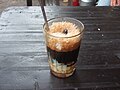 Vietnamese iced coffee with condensed milk
 -
 Homemade dulce de leche
 -
 Café bombón


Ad. Transform your life with W8MD's
GLP-1 weight loss injections special from $29.99


W8MD Medical Weight Loss, Sleep and Medspa offers physician-supervised medical weight loss programs: NYC medical weight loss Philadelphia medical weight loss
Affordable GLP-1 Weight Loss ShotsAffordable GLP-1 Weight Loss Shots
Budget GLP-1 injections NYC (insurance & self-pay options) Popular treatments:
- Semaglutide starting from $29.99/week
- Tirzepatide starting from $45.00/week
✔ Most insurances accepted for visits ✔ Prior authorization support when eligible
Start your physician weight loss NYC journey today:
📍 NYC: Brooklyn weight loss center 📍 Philadelphia: Philadelphia weight loss center
📞 Call: 718-946-5500 (NYC) | 215-676-2334 (Philadelphia)
Tags: Affordable GLP1 weight loss NYC, Wegovy NYC, Zepbound NYC, Philadelphia medical weight loss


|
WikiMD Medical Encyclopedia |
Medical Disclaimer: WikiMD is not a substitute for professional medical advice. The information on WikiMD is provided as an information resource only, may be incorrect, outdated or misleading, and is not to be used or relied on for any diagnostic or treatment purposes. Please consult your health care provider before making any healthcare decisions or for guidance about a specific medical condition. WikiMD expressly disclaims responsibility, and shall have no liability, for any damages, loss, injury, or liability whatsoever suffered as a result of your reliance on the information contained in this site. By visiting this site you agree to the foregoing terms and conditions, which may from time to time be changed or supplemented by WikiMD. If you do not agree to the foregoing terms and conditions, you should not enter or use this site. See full disclaimer.
Credits:Most images are courtesy of Wikimedia commons, and templates, categories Wikipedia, licensed under CC BY SA or similar.
Translate this page: - East Asian
中文,
日本,
한국어,
South Asian
हिन्दी,
தமிழ்,
తెలుగు,
Urdu,
ಕನ್ನಡ,
Southeast Asian
Indonesian,
Vietnamese,
Thai,
မြန်မာဘာသာ,
বাংলা
European
español,
Deutsch,
français,
Greek,
português do Brasil,
polski,
română,
русский,
Nederlands,
norsk,
svenska,
suomi,
Italian
Middle Eastern & African
عربى,
Turkish,
Persian,
Hebrew,
Afrikaans,
isiZulu,
Kiswahili,
Other
Bulgarian,
Hungarian,
Czech,
Swedish,
മലയാളം,
मराठी,
ਪੰਜਾਬੀ,
ગુજરાતી,
Portuguese,
Ukrainian
