Grepafloxacin
Grepafloxacin is a broad-spectrum antibiotic belonging to the fluoroquinolone class, which was used to treat a variety of bacterial infections. It was marketed under the brand name Raxar. Grepafloxacin works by inhibiting bacterial DNA gyrase and topoisomerase IV, enzymes necessary for DNA replication, transcription, repair, and recombination, leading to the death of the bacteria.
Medical Uses
Grepafloxacin was used to treat infections caused by susceptible strains of bacteria, including respiratory tract infections, such as chronic bronchitis and pneumonia, and was also used in the treatment of gonorrhea and chlamydia. Its broad-spectrum activity made it effective against a wide range of gram-positive and gram-negative bacteria.
Mechanism of Action
The mechanism of action of grepafloxacin involves the inhibition of bacterial DNA gyrase and topoisomerase IV. DNA gyrase is responsible for supercoiling DNA, which is necessary for DNA replication and transcription, while topoisomerase IV plays a key role in DNA replication and chromosome segregation. By inhibiting these enzymes, grepafloxacin prevents DNA replication and transcription, leading to bacterial cell death.
Side Effects
Grepafloxacin was associated with several side effects, including gastrointestinal disturbances such as nausea and diarrhea, dizziness, and photosensitivity. More serious adverse effects included QT interval prolongation, which could lead to potentially fatal arrhythmias such as torsades de pointes.
Withdrawal from Market
Grepafloxacin was withdrawn from the market in 1999 due to concerns over its safety profile, particularly the risk of cardiac arrhythmias related to QT interval prolongation. The decision to withdraw grepafloxacin was based on the risk-benefit assessment, which determined that the risks associated with its use outweighed the benefits.
Conclusion
While grepafloxacin was effective as a broad-spectrum antibiotic, its potential for causing serious cardiac side effects led to its withdrawal from the market. The case of grepafloxacin highlights the importance of continuous monitoring and evaluation of the safety profile of medications post-approval.


-
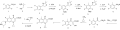 Grepafloxacin synthesis
 -
 (R)-Grepafloxacin Structural Formula
 -
 (S)-Grepafloxacin Structural Formula

-Grepafloxacin_Structural_Formula_V1.svg)
-Grepafloxacin_Structural_Formula_V1.svg)
Ad. Transform your life with W8MD's
GLP-1 weight loss injections special from $29.99 with insurance
|
WikiMD Medical Encyclopedia |
Medical Disclaimer: WikiMD is for informational purposes only and is not a substitute for professional medical advice. Content may be inaccurate or outdated and should not be used for diagnosis or treatment. Always consult your healthcare provider for medical decisions. Verify information with trusted sources such as CDC.gov and NIH.gov. By using this site, you agree that WikiMD is not liable for any outcomes related to its content. See full disclaimer.
Credits:Most images are courtesy of Wikimedia commons, and templates, categories Wikipedia, licensed under CC BY SA or similar.
Translate this page: - East Asian
中文,
日本,
한국어,
South Asian
हिन्दी,
தமிழ்,
తెలుగు,
Urdu,
ಕನ್ನಡ,
Southeast Asian
Indonesian,
Vietnamese,
Thai,
မြန်မာဘာသာ,
বাংলা
European
español,
Deutsch,
français,
Greek,
português do Brasil,
polski,
română,
русский,
Nederlands,
norsk,
svenska,
suomi,
Italian
Middle Eastern & African
عربى,
Turkish,
Persian,
Hebrew,
Afrikaans,
isiZulu,
Kiswahili,
Other
Bulgarian,
Hungarian,
Czech,
Swedish,
മലയാളം,
मराठी,
ਪੰਜਾਬੀ,
ગુજરાતી,
Portuguese,
Ukrainian
