Glass production
Glass production involves the transformation of raw materials into glass through a series of processes. The primary ingredients include silica sand (silicon dioxide), soda ash (sodium carbonate), and limestone (calcium carbonate), with various additives for color or specific properties. The process can be divided into several stages: batch preparation, melting, forming, annealing, and finishing.
Batch Preparation
The first step in glass production is batch preparation, where the raw materials are carefully weighed and mixed. The composition of the mix, or batch, determines the type of glass produced. This mixture is often referred to as the "batch formula."
Melting
The batch is then fed into a furnace where it is heated to a temperature of about 1700°C to 2000°C, depending on the type of glass being produced. This process transforms the solid raw materials into a molten state. Furnaces can be powered by various energy sources, including natural gas, oil, or electricity.
Forming
Once the glass is in its molten state, it can be formed into various shapes. The most common methods include blowing (for hollow objects), pressing (for thicker, less complex shapes), drawing (for glass sheets), and rolling (also for glass sheets). The method chosen depends on the final product's desired shape and properties.
Annealing
After forming, glass articles must be slowly cooled in an annealing lehr to relieve internal stresses. If glass cools too quickly, it can become brittle and prone to cracking. The annealing process ensures that the glass cools at a controlled rate, improving its durability and strength.
Finishing
The final stage in glass production is finishing, which may include cutting, grinding, polishing, and etching. These processes are used to achieve the desired dimensions, surface finish, and decorative patterns on the glass product.
Environmental Considerations
Glass production is energy-intensive and can have significant environmental impacts, including CO2 emissions and other pollutants. Efforts to improve the sustainability of glass production focus on increasing energy efficiency, using recycled glass (cullet), and developing innovative manufacturing processes.
Recycling
Glass is 100% recyclable and can be melted and reformed without losing purity or quality. Using cullet in the batch formula reduces the energy required for melting, as recycled glass melts at a lower temperature than the raw materials. Recycling also reduces the demand for raw materials and the environmental impact of glass production.
.svg)
-
 The interior of the 2500 degree F. furnace where crushed bottles are made into molten glass.
 -
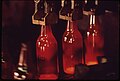 New beer bottles on assembly line after being molded from 100% old glass.
 -
 Blow-blow process steps in glass production.
 -
 Glass production at Crystal Palace Station.


Ad. Transform your health with W8MD Weight Loss, Sleep & MedSpa

Tired of being overweight?
Get started with evidence based, physician-supervised
affordable GLP-1 weight loss injections
Now available in New York City and Philadelphia:
- Semaglutide starting from $59.99/week and up
- Tirzepatide starting from $69.99/week and up (dose dependent)
✔ Evidence-based medical weight loss ✔ Insurance-friendly visits available ✔ Same-week appointments, evenings & weekends
Learn more:
Start your transformation today with W8MD weight loss centers.
|
WikiMD Medical Encyclopedia |
Medical Disclaimer: WikiMD is for informational purposes only and is not a substitute for professional medical advice. Content may be inaccurate or outdated and should not be used for diagnosis or treatment. Always consult your healthcare provider for medical decisions. Verify information with trusted sources such as CDC.gov and NIH.gov. By using this site, you agree that WikiMD is not liable for any outcomes related to its content. See full disclaimer.
Credits:Most images are courtesy of Wikimedia commons, and templates, categories Wikipedia, licensed under CC BY SA or similar.
Translate this page: - East Asian
中文,
日本,
한국어,
South Asian
हिन्दी,
தமிழ்,
తెలుగు,
Urdu,
ಕನ್ನಡ,
Southeast Asian
Indonesian,
Vietnamese,
Thai,
မြန်မာဘာသာ,
বাংলা
European
español,
Deutsch,
français,
Greek,
português do Brasil,
polski,
română,
русский,
Nederlands,
norsk,
svenska,
suomi,
Italian
Middle Eastern & African
عربى,
Turkish,
Persian,
Hebrew,
Afrikaans,
isiZulu,
Kiswahili,
Other
Bulgarian,
Hungarian,
Czech,
Swedish,
മലയാളം,
मराठी,
ਪੰਜਾਬੀ,
ગુજરાતી,
Portuguese,
Ukrainian
