Grignard reagent
Grignard Reagent
The Grignard reagent is a class of organometallic compounds that are pivotal in the field of organic chemistry for the formation of carbon-carbon bonds. Named after the French chemist François Auguste Victor Grignard, who was awarded the Nobel Prize in Chemistry in 1912 for his discovery, Grignard reagents have since become fundamental tools in the synthesis of a wide array of organic compounds, including alcohols, acids, and ketones.
Formation
Grignard reagents are formed by the reaction of an alkyl or aryl halide with magnesium metal in anhydrous diethyl ether or tetrahydrofuran (THF) as a solvent. The general formula for a Grignard reagent is RMgX, where R is an alkyl or aryl group and X is a halogen (chlorine, bromine, or iodine).
The reaction is highly sensitive to moisture; hence, it is imperative that it is carried out under strictly anhydrous conditions to prevent the hydrolysis of the reagent.
Reactivity
Grignard reagents are highly reactive towards compounds containing polar bonds. The carbon atom in the Grignard reagent has a partial negative charge, making it nucleophilic and capable of attacking electrophilic carbon atoms in carbonyl groups, leading to the formation of new carbon-carbon bonds. This reactivity is exploited in various organic synthesis reactions, including the synthesis of alcohols, carboxylic acids, and ketones.
Applications
The versatility of Grignard reagents in organic synthesis cannot be overstated. They are used in the synthesis of a wide variety of organic compounds, including:
- Alcohols: By reacting with aldehydes and ketones, Grignard reagents can form primary, secondary, and tertiary alcohols.
- Carboxylic Acids: Reaction with carbon dioxide (CO2) leads to the formation of carboxylic acids.
- Ketones: Reacting with nitriles, Grignard reagents can form ketones after hydrolysis.
Safety
Grignard reagents are highly reactive and can be dangerous if not handled properly. They are extremely sensitive to moisture and air, which can lead to violent reactions. Proper safety protocols, including the use of an inert atmosphere and dry solvents, are essential when working with these reagents.
See Also
- Organometallic chemistry
- Nobel Prize in Chemistry
- Carbon-carbon bond formation
- Alkyl halide
- Diethyl ether
- Tetrahydrofuran (THF)

-
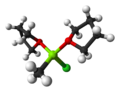 Methylmagnesium chloride in THF
 -
 Grignard reaction with carbonyl compound
 -
 Grignard reaction vinylation
 -
 Grignard reaction with other reagents
 -
 Naproxen synthesis using Grignard reagent
 -
 Synthesis of 4-nonylbenzoic acid
 -
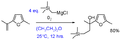 Grignard oxidation example
 -
 Boord reaction overview
 -
 Tamoxifen synthesis using Grignard reagent


Ad. Transform your life with W8MD's
GLP-1 weight loss injections special from $29.99 with insurance
|
WikiMD Medical Encyclopedia |
Medical Disclaimer: WikiMD is for informational purposes only and is not a substitute for professional medical advice. Content may be inaccurate or outdated and should not be used for diagnosis or treatment. Always consult your healthcare provider for medical decisions. Verify information with trusted sources such as CDC.gov and NIH.gov. By using this site, you agree that WikiMD is not liable for any outcomes related to its content. See full disclaimer.
Credits:Most images are courtesy of Wikimedia commons, and templates, categories Wikipedia, licensed under CC BY SA or similar.
Translate this page: - East Asian
中文,
日本,
한국어,
South Asian
हिन्दी,
தமிழ்,
తెలుగు,
Urdu,
ಕನ್ನಡ,
Southeast Asian
Indonesian,
Vietnamese,
Thai,
မြန်မာဘာသာ,
বাংলা
European
español,
Deutsch,
français,
Greek,
português do Brasil,
polski,
română,
русский,
Nederlands,
norsk,
svenska,
suomi,
Italian
Middle Eastern & African
عربى,
Turkish,
Persian,
Hebrew,
Afrikaans,
isiZulu,
Kiswahili,
Other
Bulgarian,
Hungarian,
Czech,
Swedish,
മലയാളം,
मराठी,
ਪੰਜਾਬੀ,
ગુજરાતી,
Portuguese,
Ukrainian
