Foot whipping
Foot whipping, also known as bastinado, is a method of corporal punishment or torture that involves striking the soles of a person's bare feet. Unlike most forms of physical punishment, which target the back or buttocks, foot whipping is particularly painful due to the concentration of nerve endings in the feet. It has been used throughout history in various cultures and is known by several other names, including falaka or falanga in the Middle East, and has been documented in contexts ranging from judicial to educational and even domestic settings.
History and Cultural Context
Foot whipping has a long history, with evidence of its use in ancient civilizations such as Egypt and Rome. In the Ottoman Empire, it was known as falaka or falanga, and was commonly used as a judicial punishment. The method was also prevalent in the Qing Dynasty of China, where it was part of the penal system. In more recent history, foot whipping has been reported in various countries as a form of discipline in schools, prisons, and even within households.
Procedure
The procedure for foot whipping varies by region and context but generally involves the victim being restrained, with their feet exposed and elevated. The instrument used for whipping can range from canes, rods, sticks, or whips. The number of strikes and the intensity can vary greatly, depending on the purpose of the punishment. The immediate effects are severe pain, swelling, and sometimes temporary immobility. Long-term effects can include bruising, psychological trauma, and in severe cases, permanent damage to the tissues of the feet.
Legal and Ethical Considerations
Foot whipping, as a form of corporal punishment, raises significant legal and ethical concerns. It is considered a violation of human rights by many international organizations, including the United Nations. The practice is illegal in many countries, particularly those that have ratified treaties prohibiting torture and other cruel, inhuman, or degrading treatment or punishment. However, it persists in some regions either as a judicial punishment or as an unofficial form of discipline.
Medical Implications
The medical implications of foot whipping can be severe. The feet contain a high concentration of nerve endings, making them extremely sensitive to pain. Physical damage can range from superficial bruising to deep tissue injury, fractures, and long-term nerve damage. Psychological effects can also be profound, with victims experiencing symptoms of post-traumatic stress disorder (PTSD), anxiety, and depression.
In Popular Culture
Foot whipping has been depicted in literature and film, often as a means of highlighting the brutality of certain regimes or institutions. These portrayals can sometimes be sensationalized, but they also serve to raise awareness about the practice and its consequences.
See Also
References
<references/>

-
 Foot whipping
 -
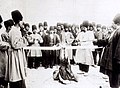 Falak: Whipping the soles of a criminal
 -
 Foot whipping in Amna Suraka museum, Sulaymaniyah
 -
 Foot whipping


_(14749531916).jpg)
Ad. Transform your life with W8MD's
GLP-1 weight loss injections special from $29.99 with insurance
|
WikiMD Medical Encyclopedia |
Medical Disclaimer: WikiMD is for informational purposes only and is not a substitute for professional medical advice. Content may be inaccurate or outdated and should not be used for diagnosis or treatment. Always consult your healthcare provider for medical decisions. Verify information with trusted sources such as CDC.gov and NIH.gov. By using this site, you agree that WikiMD is not liable for any outcomes related to its content. See full disclaimer.
Credits:Most images are courtesy of Wikimedia commons, and templates, categories Wikipedia, licensed under CC BY SA or similar.
Translate this page: - East Asian
中文,
日本,
한국어,
South Asian
हिन्दी,
தமிழ்,
తెలుగు,
Urdu,
ಕನ್ನಡ,
Southeast Asian
Indonesian,
Vietnamese,
Thai,
မြန်မာဘာသာ,
বাংলা
European
español,
Deutsch,
français,
Greek,
português do Brasil,
polski,
română,
русский,
Nederlands,
norsk,
svenska,
suomi,
Italian
Middle Eastern & African
عربى,
Turkish,
Persian,
Hebrew,
Afrikaans,
isiZulu,
Kiswahili,
Other
Bulgarian,
Hungarian,
Czech,
Swedish,
മലയാളം,
मराठी,
ਪੰਜਾਬੀ,
ગુજરાતી,
Portuguese,
Ukrainian
