Iris recognition
Iris recognition is a method of biometric authentication that uses pattern recognition techniques based on high-resolution images of the irises of an individual's eyes. Unlike other forms of biometric systems, such as fingerprints or facial recognition, iris recognition is considered to be one of the most accurate and reliable methods of identity verification.
Overview
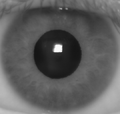
The human iris, a thin, circular structure in the eye, controls the diameter and size of the pupil and thus the amount of light reaching the retina. The patterns within the iris are complex, unique, and stable over a person's life, making them ideal for biometric identification. The process of iris recognition involves several key steps: image capture, segmentation, normalization, feature extraction, and matching.
Technology
Image Capture
The first step in iris recognition is to capture a high-quality image of the eye. This is typically done using a specialized camera that can work with visible or near-infrared light, which helps to highlight the unique features of the iris while minimizing reflections from the cornea.
Segmentation
Once an image is captured, the next step is segmentation. This involves isolating the iris from the rest of the eye and the surrounding area. Advanced algorithms are used to detect the boundaries of the iris, the pupil, and the sclera (white of the eye), and to exclude eyelids, eyelashes, and reflections that might distort the iris pattern.
Normalization
Normalization is the process of transforming the iris region from its original circular form into a rectangular block of fixed dimensions. This step ensures that the representation of the iris is consistent, regardless of the size of the iris or the dilation of the pupil at the time of image capture.
Feature Extraction
Feature extraction involves analyzing the normalized iris image to identify patterns that can be used for matching. This typically involves filtering the image to highlight features such as ridges, furrows, and freckles, and then encoding these features in a compact form, often referred to as an iris code.
Matching
The final step is matching, where the iris code generated from an individual's eye is compared against a database of stored codes. If a match is found, the identity of the individual is verified.
Applications
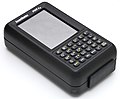
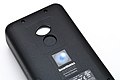
Iris recognition technology is used in various applications where secure and reliable identification is required. This includes airport security, border control, access control to secure facilities, and more recently, in consumer electronics for device authentication.
Advantages and Disadvantages
One of the main advantages of iris recognition is its high level of accuracy and low false match rates. The iris is also an internal organ that is well protected against damage and wear, and its patterns are stable over a person's life. However, the technology can be expensive, and its effectiveness can be impacted by factors such as poor image quality, reflections, and obstructions like glasses or contact lenses.
Conclusion
Iris recognition is a powerful and reliable biometric technology that offers a high level of security for identity verification. As technology advances and becomes more accessible, it is likely to see wider adoption across various sectors.
This article is a Biometrics stub. You can help WikiMD by expanding it!
-
 Iris_recognition
 -
Iris_recognition
-
 Iris_recognition
 -
 Iris_recognition
 -
 Iris_recognition
 -
 Iris_recognition
 -
 Iris_recognition
 -
Iris_recognition
-
 Iris_recognition
 -
 Iris_recognition


.jpg)


Ad. Transform your life with W8MD's
GLP-1 weight loss injections special from $29.99 with insurance
|
WikiMD Medical Encyclopedia |
Medical Disclaimer: WikiMD is for informational purposes only and is not a substitute for professional medical advice. Content may be inaccurate or outdated and should not be used for diagnosis or treatment. Always consult your healthcare provider for medical decisions. Verify information with trusted sources such as CDC.gov and NIH.gov. By using this site, you agree that WikiMD is not liable for any outcomes related to its content. See full disclaimer.
Credits:Most images are courtesy of Wikimedia commons, and templates, categories Wikipedia, licensed under CC BY SA or similar.
Translate this page: - East Asian
中文,
日本,
한국어,
South Asian
हिन्दी,
தமிழ்,
తెలుగు,
Urdu,
ಕನ್ನಡ,
Southeast Asian
Indonesian,
Vietnamese,
Thai,
မြန်မာဘာသာ,
বাংলা
European
español,
Deutsch,
français,
Greek,
português do Brasil,
polski,
română,
русский,
Nederlands,
norsk,
svenska,
suomi,
Italian
Middle Eastern & African
عربى,
Turkish,
Persian,
Hebrew,
Afrikaans,
isiZulu,
Kiswahili,
Other
Bulgarian,
Hungarian,
Czech,
Swedish,
മലയാളം,
मराठी,
ਪੰਜਾਬੀ,
ગુજરાતી,
Portuguese,
Ukrainian

