Fire department
Fire Department
The fire department, also known as a fire brigade or fire service, is an essential public or private organization that provides firefighting, rescue services, and other emergency services to a particular geographic area. Fire departments are crucial in protecting the public from the dangers of fire, as well as providing emergency medical services, hazardous materials response, and technical rescue. The primary goal of a fire department is to save lives, protect property, and assist during disasters.
History
The concept of a fire department dates back to ancient times, with the first organized firefighting service established in Ancient Rome by Augustus. However, the modern fire department, as known today, began to take shape in the 17th century with the establishment of the first public fire brigade in Edinburgh, Scotland, by the insurance company, the "Fire Office." The development of fire departments in the United States began in the 18th century, with the most notable early fire company being the Union Fire Company in Philadelphia, founded by Benjamin Franklin in 1736.
Structure
Fire departments can vary greatly in size and structure depending on the needs of the community they serve. They can be categorized into two main types: career and volunteer. Career fire departments are staffed by full-time professional firefighters, while volunteer fire departments rely on the services of community members who respond to emergencies on a voluntary basis. Some departments operate as a combination of both, known as combination fire departments.
Organization
The organization of a fire department typically includes several ranks, starting with the firefighter at the base level, followed by fire engineer or driver/operator, lieutenant, captain, battalion chief, assistant chief, and culminating with the fire chief at the top. The fire department may also include specialized units such as fire prevention, fire investigation, and public education divisions.
Operations
Fire department operations involve a range of activities beyond firefighting. These include:
- Fire suppression: The primary function, involving the extinguishment of fires to save lives and protect property.
- Emergency medical services (EMS): Many fire departments provide EMS, offering basic or advanced life support.
- Technical rescue: Specialized rescue operations including urban search and rescue, water rescue, and wilderness rescue.
- Hazardous materials (HazMat) response: Handling incidents involving hazardous substances.
- Fire prevention and education: Efforts to prevent fire through inspections, code enforcement, and public education campaigns.
Equipment
Fire departments are equipped with a variety of tools and vehicles to respond to emergencies. The most recognizable is the fire engine, used for fire suppression, which carries water, firefighting equipment, and hoses. Other vehicles include ladder trucks, for access to high buildings; rescue units, for technical rescues; and hazmat units, for hazardous materials incidents.
Training
Training is a critical component of a fire department's effectiveness. Firefighters undergo rigorous initial training at a fire academy and continue with ongoing education and training throughout their careers. This training covers a broad range of topics, from firefighting techniques and EMS to hazardous materials handling and disaster response.
Challenges
Fire departments face numerous challenges, including the increasing complexity of modern buildings, the dangers of hazardous materials, and the physical and mental health risks associated with emergency response work. Additionally, fire departments must adapt to the changing nature of emergencies, including natural disasters and terrorist incidents.
Conclusion
The fire department plays a vital role in community safety and emergency response. Through their dedication and expertise, firefighters protect lives and property, demonstrating courage and commitment in the face of danger. The evolution of fire departments continues as they adapt to new challenges and technologies, ensuring the safety and well-being of the communities they serve.
-
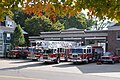 Fire engines at station
 -
 Fire department vehicles
 -
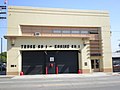 LAFD Station
 -
 Vaughan Fire training
 -
 Knox fire engine
 -
 Dennis 1951 Fire Tender
 -
 NSW Fire Brigades Pumper Class 2 and rescue
 -
 Special Rescue Group of the Volunteer Fire Department from Nowy Sącz
 -
 Haddonfield fire department history


Ad. Transform your life with W8MD's
GLP-1 weight loss injections special from $29.99 with insurance
|
WikiMD Medical Encyclopedia |
Medical Disclaimer: WikiMD is for informational purposes only and is not a substitute for professional medical advice. Content may be inaccurate or outdated and should not be used for diagnosis or treatment. Always consult your healthcare provider for medical decisions. Verify information with trusted sources such as CDC.gov and NIH.gov. By using this site, you agree that WikiMD is not liable for any outcomes related to its content. See full disclaimer.
Credits:Most images are courtesy of Wikimedia commons, and templates, categories Wikipedia, licensed under CC BY SA or similar.
Translate this page: - East Asian
中文,
日本,
한국어,
South Asian
हिन्दी,
தமிழ்,
తెలుగు,
Urdu,
ಕನ್ನಡ,
Southeast Asian
Indonesian,
Vietnamese,
Thai,
မြန်မာဘာသာ,
বাংলা
European
español,
Deutsch,
français,
Greek,
português do Brasil,
polski,
română,
русский,
Nederlands,
norsk,
svenska,
suomi,
Italian
Middle Eastern & African
عربى,
Turkish,
Persian,
Hebrew,
Afrikaans,
isiZulu,
Kiswahili,
Other
Bulgarian,
Hungarian,
Czech,
Swedish,
മലയാളം,
मराठी,
ਪੰਜਾਬੀ,
ગુજરાતી,
Portuguese,
Ukrainian
