Cancer immunology
Cancer immunology is the study of the interplay between the immune system and cancer cells. It is a field of research that aims to understand how the immune system can be harnessed to fight cancer. This area of study has led to significant advancements in cancer treatment, including the development of immunotherapies that boost the body's natural defenses to kill cancer cells.
Overview
Cancer immunology revolves around the concept that the immune system, which typically guards against infections and diseases, can also identify and destroy cancer cells. However, cancer cells have developed various mechanisms to evade immune detection and destruction. Understanding these mechanisms is crucial for developing effective cancer treatments.
Immune System and Cancer
The immune system is composed of a complex network of cells, tissues, and organs that work together to defend the body against foreign invaders, such as bacteria, viruses, and cancer cells. Key components of the immune system involved in cancer immunology include T lymphocytes, B lymphocytes, natural killer cells, and dendritic cells. These cells can recognize and attack cancer cells, but their effectiveness can be hindered by the strategies cancer cells use to evade immune responses.
Cancer Immune Evasion
Cancer cells employ several strategies to evade the immune system, including: - **Immunosuppression**: Cancer cells can produce substances that suppress immune responses, creating an environment that allows them to grow unchallenged. - **Antigenic modulation**: By altering the antigens on their surface, cancer cells can become less recognizable to the immune system. - **Induction of tolerance**: Cancer cells can induce a state of tolerance in the immune system, where the immune system fails to recognize and attack them as foreign.
Immunotherapies
Immunotherapy is a type of cancer treatment that stimulates the body's immune system to fight cancer. There are several types of immunotherapies, including: - **Checkpoint inhibitors**: These drugs block proteins that prevent T cells from attacking cancer cells. - **CAR T-cell therapy**: This treatment involves genetically modifying a patient's T cells to better recognize and attack cancer cells. - **Cancer vaccines**: Vaccines designed to elicit an immune response against cancer-specific antigens.
Future Directions
Research in cancer immunology is rapidly advancing, with new discoveries leading to the development of more effective treatments. Future directions include the combination of immunotherapies with other cancer treatments, the identification of new immune targets, and the development of personalized immunotherapy based on individual patient's immune profiles.
Conclusion
Cancer immunology is a promising field of research that has the potential to revolutionize cancer treatment. By understanding how the immune system interacts with cancer cells, researchers can develop new therapies that improve the survival and quality of life for cancer patients.

-
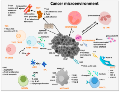 Tumor-associated immune cells in the tumor microenvironment of breast cancer models
 -
 Tumor microenvironment
 -
 Immune checkpoints of immunosuppressive actions associated with breast cancer
_of_breast_cancer_models.svg)


Ad. Transform your life with W8MD's
GLP-1 weight loss injections special from $29.99 with insurance
|
WikiMD Medical Encyclopedia |
Medical Disclaimer: WikiMD is for informational purposes only and is not a substitute for professional medical advice. Content may be inaccurate or outdated and should not be used for diagnosis or treatment. Always consult your healthcare provider for medical decisions. Verify information with trusted sources such as CDC.gov and NIH.gov. By using this site, you agree that WikiMD is not liable for any outcomes related to its content. See full disclaimer.
Credits:Most images are courtesy of Wikimedia commons, and templates, categories Wikipedia, licensed under CC BY SA or similar.
Translate this page: - East Asian
中文,
日本,
한국어,
South Asian
हिन्दी,
தமிழ்,
తెలుగు,
Urdu,
ಕನ್ನಡ,
Southeast Asian
Indonesian,
Vietnamese,
Thai,
မြန်မာဘာသာ,
বাংলা
European
español,
Deutsch,
français,
Greek,
português do Brasil,
polski,
română,
русский,
Nederlands,
norsk,
svenska,
suomi,
Italian
Middle Eastern & African
عربى,
Turkish,
Persian,
Hebrew,
Afrikaans,
isiZulu,
Kiswahili,
Other
Bulgarian,
Hungarian,
Czech,
Swedish,
മലയാളം,
मराठी,
ਪੰਜਾਬੀ,
ગુજરાતી,
Portuguese,
Ukrainian
