Extrinsic extensor muscles of the hand
Extrinsic extensor muscles of the hand are a group of muscles located in the posterior compartment of the forearm. These muscles are primarily responsible for the extension of the wrist and fingers. The extrinsic extensor muscles of the hand include the Extensor carpi radialis longus, Extensor carpi radialis brevis, Extensor digitorum, Extensor digiti minimi, Extensor carpi ulnaris, Abductor pollicis longus, Extensor pollicis brevis, and Extensor pollicis longus.
Anatomy
The extrinsic extensor muscles of the hand originate from the lateral epicondyle of the humerus and insert into various locations on the hand and fingers. They are innervated by the Radial nerve and receive blood supply from the Radial artery and Ulnar artery.
Extensor carpi radialis longus
The Extensor carpi radialis longus originates from the lateral supracondylar ridge of the humerus and inserts into the base of the second metacarpal. It is responsible for extending and abducting the wrist.
Extensor carpi radialis brevis
The Extensor carpi radialis brevis originates from the lateral epicondyle of the humerus and inserts into the base of the third metacarpal. It is responsible for extending and abducting the wrist.
Extensor digitorum
The Extensor digitorum originates from the lateral epicondyle of the humerus and inserts into the extensor expansion of the medial four digits. It is responsible for extending the fingers and wrist.
Extensor digiti minimi
The Extensor digiti minimi originates from the lateral epicondyle of the humerus and inserts into the extensor expansion of the fifth digit. It is responsible for extending the little finger and wrist.
Extensor carpi ulnaris
The Extensor carpi ulnaris originates from the lateral epicondyle of the humerus and inserts into the base of the fifth metacarpal. It is responsible for extending and adducting the wrist.
Abductor pollicis longus
The Abductor pollicis longus originates from the posterior surface of the radius and ulna and inserts into the base of the first metacarpal. It is responsible for abducting and extending the thumb.
Extensor pollicis brevis
The Extensor pollicis brevis originates from the posterior surface of the radius and inserts into the base of the proximal phalanx of the thumb. It is responsible for extending the thumb.
Extensor pollicis longus
The Extensor pollicis longus originates from the posterior surface of the ulna and interosseous membrane and inserts into the base of the distal phalanx of the thumb. It is responsible for extending the thumb.
Clinical significance
Injury or damage to the extrinsic extensor muscles of the hand can result in a loss of hand function. Conditions such as Tennis elbow and Radial tunnel syndrome can affect these muscles.
See also

-
 Extrinsic extensor muscles of the hand - Image 1
 -
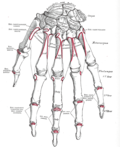 Extrinsic extensor muscles of the hand - Image 2


Ad. Transform your life with W8MD's
GLP-1 weight loss injections special from $29.99 with insurance
|
WikiMD Medical Encyclopedia |
Medical Disclaimer: WikiMD is for informational purposes only and is not a substitute for professional medical advice. Content may be inaccurate or outdated and should not be used for diagnosis or treatment. Always consult your healthcare provider for medical decisions. Verify information with trusted sources such as CDC.gov and NIH.gov. By using this site, you agree that WikiMD is not liable for any outcomes related to its content. See full disclaimer.
Credits:Most images are courtesy of Wikimedia commons, and templates, categories Wikipedia, licensed under CC BY SA or similar.
Translate this page: - East Asian
中文,
日本,
한국어,
South Asian
हिन्दी,
தமிழ்,
తెలుగు,
Urdu,
ಕನ್ನಡ,
Southeast Asian
Indonesian,
Vietnamese,
Thai,
မြန်မာဘာသာ,
বাংলা
European
español,
Deutsch,
français,
Greek,
português do Brasil,
polski,
română,
русский,
Nederlands,
norsk,
svenska,
suomi,
Italian
Middle Eastern & African
عربى,
Turkish,
Persian,
Hebrew,
Afrikaans,
isiZulu,
Kiswahili,
Other
Bulgarian,
Hungarian,
Czech,
Swedish,
മലയാളം,
मराठी,
ਪੰਜਾਬੀ,
ગુજરાતી,
Portuguese,
Ukrainian
