Christmas cake
Christmas Cake is a type of cake traditionally served in many countries during the Christmas season. The cake is often made in various styles and flavors, depending on the country and individual family traditions.
History
The tradition of the Christmas cake dates back to the Middle Ages, when it was customary to make a plum porridge for Christmas. Over time, the porridge was modified into a cake by adding ingredients such as butter, flour, and eggs. The cake was often made on the 25th day of December, hence the name "Christmas Cake".
Varieties
There are many different types of Christmas cakes around the world. In the United Kingdom, a rich, dark cake full of dried fruit and spices, and often covered with marzipan and icing, is traditional. In Japan, Christmas cake is typically a light sponge cake with whipped cream and strawberries.
United Kingdom
The British Christmas cake is a rich, dark cake full of dried fruit and spices. It is often covered with marzipan and icing, and decorated with Christmas-themed decorations. The cake is traditionally made on Stir-up Sunday, the last Sunday before Advent, which gives the flavors time to develop before Christmas.
Japan
In Japan, Christmas cake is typically a light sponge cake with whipped cream and strawberries. The cake is often decorated with Christmas-themed decorations and is a popular treat during the Christmas season.
See also
References
<references />

-
 A traditional Christmas cake with icing and decorations.
 -
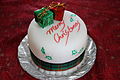 Christmas cake served on Boxing Day 2008.
 -
 A close-up of a decorated Christmas cake.
 -
 Christmas cakes on display at Nijiya Market in San Diego.
.jpg)

.jpg)

Ad. Transform your life with W8MD's
GLP-1 weight loss injections special from $29.99 with insurance
|
WikiMD Medical Encyclopedia |
Medical Disclaimer: WikiMD is for informational purposes only and is not a substitute for professional medical advice. Content may be inaccurate or outdated and should not be used for diagnosis or treatment. Always consult your healthcare provider for medical decisions. Verify information with trusted sources such as CDC.gov and NIH.gov. By using this site, you agree that WikiMD is not liable for any outcomes related to its content. See full disclaimer.
Credits:Most images are courtesy of Wikimedia commons, and templates, categories Wikipedia, licensed under CC BY SA or similar.
Translate this page: - East Asian
中文,
日本,
한국어,
South Asian
हिन्दी,
தமிழ்,
తెలుగు,
Urdu,
ಕನ್ನಡ,
Southeast Asian
Indonesian,
Vietnamese,
Thai,
မြန်မာဘာသာ,
বাংলা
European
español,
Deutsch,
français,
Greek,
português do Brasil,
polski,
română,
русский,
Nederlands,
norsk,
svenska,
suomi,
Italian
Middle Eastern & African
عربى,
Turkish,
Persian,
Hebrew,
Afrikaans,
isiZulu,
Kiswahili,
Other
Bulgarian,
Hungarian,
Czech,
Swedish,
മലയാളം,
मराठी,
ਪੰਜਾਬੀ,
ગુજરાતી,
Portuguese,
Ukrainian
