Breast augmentation
Breast augmentation is a surgical procedure that involves the enlargement of the breasts. This is typically achieved through the insertion of breast implants or, in some cases, fat transfer.
History
The history of breast augmentation can be traced back to the late 19th century. However, the first silicone breast implants were not developed until the 1960s by two plastic surgeons from the United States, Frank Gerow and Thomas Cronin.
Procedure
Breast augmentation is usually performed under general anesthesia. The surgeon makes an incision in the breast, creates a pocket, and inserts the implant. The incision is then closed with sutures. The procedure typically takes one to two hours.
Types of Implants
There are two main types of breast implants: saline and silicone. Saline implants are filled with sterile salt water, while silicone implants are filled with a plastic gel. Each type has its own advantages and disadvantages.
Risks and Complications
Like any surgery, breast augmentation carries risks, including infection, changes in nipple or breast sensation, and complications related to anesthesia. Specific complications related to the implants include capsular contracture, implant leakage or rupture, and cosmetic concerns such as dissatisfaction with the size or shape of the breasts.
Recovery
Recovery from breast augmentation surgery typically takes several weeks. Patients are usually advised to avoid strenuous activity for at least a few weeks after surgery.
See Also
References
<references />
 | |
|---|---|
 |
 |
-
 Breast augmentation
 -
 Breast augmentation
 -
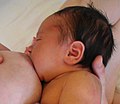 Breast augmentation
 -
 Breast augmentation
 -
 Breast augmentation
 -
 Breast augmentation
 -
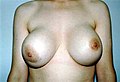 Breast augmentation
 -
 Breast augmentation
 -
 Breast augmentation
 -
 Breast augmentation
 -
 Breast augmentation
 -
 Breast augmentation


Ad. Transform your life with W8MD's
GLP-1 weight loss injections special from $29.99 with insurance
|
WikiMD Medical Encyclopedia |
Medical Disclaimer: WikiMD is for informational purposes only and is not a substitute for professional medical advice. Content may be inaccurate or outdated and should not be used for diagnosis or treatment. Always consult your healthcare provider for medical decisions. Verify information with trusted sources such as CDC.gov and NIH.gov. By using this site, you agree that WikiMD is not liable for any outcomes related to its content. See full disclaimer.
Credits:Most images are courtesy of Wikimedia commons, and templates, categories Wikipedia, licensed under CC BY SA or similar.
Translate this page: - East Asian
中文,
日本,
한국어,
South Asian
हिन्दी,
தமிழ்,
తెలుగు,
Urdu,
ಕನ್ನಡ,
Southeast Asian
Indonesian,
Vietnamese,
Thai,
မြန်မာဘာသာ,
বাংলা
European
español,
Deutsch,
français,
Greek,
português do Brasil,
polski,
română,
русский,
Nederlands,
norsk,
svenska,
suomi,
Italian
Middle Eastern & African
عربى,
Turkish,
Persian,
Hebrew,
Afrikaans,
isiZulu,
Kiswahili,
Other
Bulgarian,
Hungarian,
Czech,
Swedish,
മലയാളം,
मराठी,
ਪੰਜਾਬੀ,
ગુજરાતી,
Portuguese,
Ukrainian
