Camera obscura
Camera Obscura
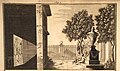
The camera obscura (Latin for "dark room") is an optical device that led to photography and the photographic camera. The device consists of a box or room with a hole in one side. Light from an external scene passes through the hole and strikes a surface inside, where the scene is reproduced, inverted (thus upside-down), but with color and perspective preserved.
History
The concept of the camera obscura has been in existence since antiquity. The earliest written record of the camera obscura is to be found in the writings of Mozi, a Chinese philosopher who lived in the 5th century BCE. He formally recorded the creation of an image with a pinhole or lens through the phenomenon of light projection.
Principle
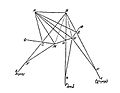
The camera obscura operates on the principle of optics. When light passes through the aperture, it projects an inverted image on the opposite wall of the chamber. This is due to the linear propagation of light. The image's size, brightness, and color can be adjusted by changing the size of the aperture and the ambient light.
Applications
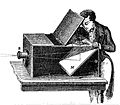
The camera obscura was a fundamental tool in the development of the Renaissance art. Artists such as Leonardo da Vinci and Vermeer are believed to have used the camera obscura to aid in their work. In the 19th century, the camera obscura was miniaturized and became widely used in photography.
Modern Usage
Today, the camera obscura is primarily used for educational purposes, particularly in demonstrating the principles of optics and light.
See Also


-
 Camera_obscura
 -
 Camera_obscura
 -
 Camera_obscura
 -
 Camera_obscura
 -
 Camera_obscura
 -
 Camera_obscura
 -
 Camera_obscura
 -
 Camera_obscura
 -
 Camera_obscura
 -
 Camera_obscura
 -
 Camera_obscura
 -
 Camera_obscura


_0071-q75-644x596.jpg)


Ad. Transform your life with W8MD's
GLP-1 weight loss injections special from $29.99 with insurance
|
WikiMD Medical Encyclopedia |
Medical Disclaimer: WikiMD is for informational purposes only and is not a substitute for professional medical advice. Content may be inaccurate or outdated and should not be used for diagnosis or treatment. Always consult your healthcare provider for medical decisions. Verify information with trusted sources such as CDC.gov and NIH.gov. By using this site, you agree that WikiMD is not liable for any outcomes related to its content. See full disclaimer.
Credits:Most images are courtesy of Wikimedia commons, and templates, categories Wikipedia, licensed under CC BY SA or similar.
Translate this page: - East Asian
中文,
日本,
한국어,
South Asian
हिन्दी,
தமிழ்,
తెలుగు,
Urdu,
ಕನ್ನಡ,
Southeast Asian
Indonesian,
Vietnamese,
Thai,
မြန်မာဘာသာ,
বাংলা
European
español,
Deutsch,
français,
Greek,
português do Brasil,
polski,
română,
русский,
Nederlands,
norsk,
svenska,
suomi,
Italian
Middle Eastern & African
عربى,
Turkish,
Persian,
Hebrew,
Afrikaans,
isiZulu,
Kiswahili,
Other
Bulgarian,
Hungarian,
Czech,
Swedish,
മലയാളം,
मराठी,
ਪੰਜਾਬੀ,
ગુજરાતી,
Portuguese,
Ukrainian
