Book lung
Book lung is a type of respiratory system found in many arachnids, such as scorpions and spiders. It is named for its structure, which resembles a book with many pages or leaves.
Structure and Function
A book lung consists of a series of thin, flat plates, or "leaves," of respiratory tissue. These leaves are arranged in a stack, like the pages of a book, hence the name "book lung." The leaves are enclosed in an internal cavity, the atrium, which opens to the outside through a small hole, the spiracle.
Air enters the book lung through the spiracle and flows between the leaves, where oxygen is absorbed into the blood and carbon dioxide is released. This process of gas exchange is facilitated by a thin layer of moisture on the surface of the leaves, which dissolves the gases and allows them to diffuse across the cell membranes.
Evolution and Diversity
Book lungs are believed to have evolved from the gills of aquatic arachnids. The transition from gills to book lungs would have allowed these animals to colonize terrestrial environments, where oxygen is more abundant and easier to extract from the air than from water.
Not all arachnids have book lungs. Some, like the harvestman and the mite, have evolved other types of respiratory systems, such as tracheae or lungs. However, book lungs are a defining characteristic of the order Araneae, which includes all true spiders.
See Also

Book_lung
-
 Diagram of a spider's ventral anatomy
 -
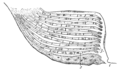 Illustration of book lungs from Comstock's book
 -
 Diagram of spider internal anatomy
 -
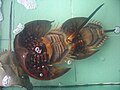 Tachypleus tridentatus, a horseshoe crab


Medical Disclaimer: WikiMD is for informational purposes only and is not a substitute for professional medical advice. Content may be inaccurate or outdated and should not be used for diagnosis or treatment. Always consult your healthcare provider for medical decisions. Verify information with trusted sources such as CDC.gov and NIH.gov. By using this site, you agree that WikiMD is not liable for any outcomes related to its content. See full disclaimer.
Credits:Most images are courtesy of Wikimedia commons, and templates, categories Wikipedia, licensed under CC BY SA or similar.
Translate this page: - East Asian
中文,
日本,
한국어,
South Asian
हिन्दी,
தமிழ்,
తెలుగు,
Urdu,
ಕನ್ನಡ,
Southeast Asian
Indonesian,
Vietnamese,
Thai,
မြန်မာဘာသာ,
বাংলা
European
español,
Deutsch,
français,
Greek,
português do Brasil,
polski,
română,
русский,
Nederlands,
norsk,
svenska,
suomi,
Italian
Middle Eastern & African
عربى,
Turkish,
Persian,
Hebrew,
Afrikaans,
isiZulu,
Kiswahili,
Other
Bulgarian,
Hungarian,
Czech,
Swedish,
മലയാളം,
मराठी,
ਪੰਜਾਬੀ,
ગુજરાતી,
Portuguese,
Ukrainian
