Kaleidoscope
Kaleidoscope is an optical instrument that presents an ever-changing view for those who look through it. It was invented by Sir David Brewster in 1816 and has since become a popular toy and tool for studying light and symmetry.
History
The kaleidoscope was invented by Scottish scientist Sir David Brewster in 1816 while conducting experiments on light polarization. Its name derives from the Greek words, Kalos (meaning 'beautiful'), Eidos ('form') and Scopeo ('to look at'). Brewster patented his invention in 1817, but due to a fault in the patent, many copies were made without his permission.
Design and Function
A typical kaleidoscope contains two or more reflecting surfaces (usually mirrors) inclined to each other at an angle, so that one or more (parts of) objects on one end of the mirrors are seen as a regular symmetrical pattern when viewed from the other end, due to repeated reflection. The reflectors (or mirrors) are usually enclosed in a tube, often containing on one end a cell with loose, colored pieces of glass or other transparent (and/or opaque) materials to be reflected into the viewed pattern. Rotation of the cell causes motion of the materials, resulting in an ever-changing view being presented.
Uses
While kaleidoscopes are often seen as toys, they also have serious applications. They are used in the fields of physics and psychology to study light and the human perception of symmetry. In the arts, they are used for inspiration and design, and in the spiritual world, they are used as metaphors for the complexity and beauty of the universe.
Variations
There are many variations of the kaleidoscope. Some change the number of mirrors or the angles between them. Others change the objects that are reflected. Some modern kaleidoscopes incorporate electronics, such as LEDs, to enhance the visual effects.
See Also
 | This optics-related article is a stub. You can help Wikipedia by adding missing information. |
 | This Scotland-related article is a stub. You can help Wikipedia by adding missing information. |
 | This toy-related article is a stub. You can help Wikipedia by adding missing information. |
-
 Kaleidoscope tube 1
 -
 Kaleidoscope construction
 -
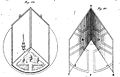 1819 Brewster - Treatise on the Kaleidoscope fig 39-40 (Kircher - Bradley comparison)
 -
 Kaleidoscopes
 -
 Kaleidoscope
 -
 1819 Brewster - Treatise on the Kaleidoscope fig 18-20
 -
 1819 Brewster - Treatise on the Kaleidoscope fig 33-36
 -
 1817 Brewster - Kaleidoscope patent fig 4-5


.jpg)


Ad. Transform your health with W8MD Weight Loss, Sleep & MedSpa

Tired of being overweight?
Special offer:
Budget GLP-1 weight loss medications
- Semaglutide starting from $29.99/week and up with insurance for visit of $59.99 and up per week self pay.
- Tirzepatide starting from $45.00/week and up (dose dependent) or $69.99/week and up self pay
✔ Same-week appointments, evenings & weekends ✔ Tele visits available with certain limitations Learn more:
- GLP-1 weight loss clinic NYC
- W8MD's NYC medical weight loss
- W8MD Philadelphia GLP-1 shots
- Philadelphia GLP-1 injections
- Affordable GLP-1 shots NYC
- Budget GLP-1 shots
|
WikiMD Medical Encyclopedia |
Medical Disclaimer: WikiMD is for informational purposes only and is not a substitute for professional medical advice. Content may be inaccurate or outdated and should not be used for diagnosis or treatment. Always consult your healthcare provider for medical decisions. Verify information with trusted sources such as CDC.gov and NIH.gov. By using this site, you agree that WikiMD is not liable for any outcomes related to its content. See full disclaimer.
Credits:Most images are courtesy of Wikimedia commons, and templates, categories Wikipedia, licensed under CC BY SA or similar.
Translate this page: - East Asian
中文,
日本,
한국어,
South Asian
हिन्दी,
தமிழ்,
తెలుగు,
Urdu,
ಕನ್ನಡ,
Southeast Asian
Indonesian,
Vietnamese,
Thai,
မြန်မာဘာသာ,
বাংলা
European
español,
Deutsch,
français,
Greek,
português do Brasil,
polski,
română,
русский,
Nederlands,
norsk,
svenska,
suomi,
Italian
Middle Eastern & African
عربى,
Turkish,
Persian,
Hebrew,
Afrikaans,
isiZulu,
Kiswahili,
Other
Bulgarian,
Hungarian,
Czech,
Swedish,
മലയാളം,
मराठी,
ਪੰਜਾਬੀ,
ગુજરાતી,
Portuguese,
Ukrainian
