Underwater habitat
Underwater Habitat
An underwater habitat is a structure designed to allow humans to live and work beneath the surface of the water for extended periods. These habitats are used for scientific research, exploration, and sometimes for recreational purposes. They provide a controlled environment where divers can decompress, rest, and conduct experiments without the need to return to the surface frequently.
History
The concept of underwater habitats dates back to the early 20th century, but it was not until the 1960s that significant advancements were made. The Conshelf projects, led by Jacques Cousteau, were among the first successful attempts to create underwater living spaces. These projects demonstrated the feasibility of humans living underwater for extended periods.
Design and Functionality
Underwater habitats are typically anchored to the seabed and are equipped with life support systems to provide air, remove carbon dioxide, and maintain a comfortable temperature and humidity. They often include living quarters, laboratories, and storage areas. Access to the habitat is usually through a moon pool, which allows divers to enter and exit the habitat while maintaining a dry interior.
Notable Underwater Habitats
- Conshelf II - A pioneering underwater habitat established by Jacques Cousteau in the Red Sea.
- SEALAB - A series of underwater habitats developed by the United States Navy for research purposes.
- Aquarius Reef Base - The only operational underwater habitat as of the 21st century, located off the coast of Florida.
- Tektite - An underwater laboratory used for scientific research in the late 1960s and early 1970s.
Applications
Underwater habitats are used for a variety of purposes, including:
- Scientific Research - Studying marine life, oceanography, and the effects of long-term underwater living on humans.
- Military Operations - Training and research for naval operations.
- Recreational and Commercial - Some habitats are used for tourism and underwater hotels.
Challenges
Living underwater presents several challenges, including maintaining a stable environment, ensuring a reliable supply of air and power, and dealing with the physiological effects of long-term exposure to increased pressure.
Related Pages
Gallery
-
 Unterwasserstation Helgoland
 -
 Underwater Habitat Type 3
 -
 Underwater Habitat Type 4
 -
 Man in the Sea Cylinder
 -
 Conshelf II - Starfish
 -
 Conshelf III
 -
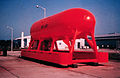 SEALAB I
 -
 SEALAB II
 -
 SEALAB III
 -
 Tektite I
 -
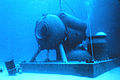 HYDROLAB
 -
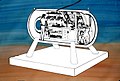 Hyrdolab
 -
 EDALHAB
 -
 Unterwasserstation BAH-1
 -
 Progetto Abissi 2007
 -
 Aquarius Laboratory
 -
 Aquarius in the Sea
 -
 Aquarius on Shore
 -
 La Chalupa Research Laboratory
 -
 Scott Carpenter Space Analog Station
 -
 GALATHEE
 -
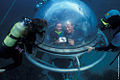 Aquabulle
 -
 HIPPOCAMPE
 -
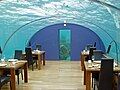 Ithaa Inside
 -
 Red Sea Star
 -
 Underwater Observatory in Eilat
 -
 Alpha Deep SeaPod


.jpg)


.JPG)


Ad. Transform your life with W8MD's Budget GLP-1 injections from $75


W8MD offers a medical weight loss program to lose weight in Philadelphia. Our physician-supervised medical weight loss provides:
- Weight loss injections in NYC (generic and brand names):
- Zepbound / Mounjaro, Wegovy / Ozempic, Saxenda
- Most insurances accepted or discounted self-pay rates. We will obtain insurance prior authorizations if needed.
- Generic GLP1 weight loss injections from $75 for the starting dose.
- Also offer prescription weight loss medications including Phentermine, Qsymia, Diethylpropion, Contrave etc.
NYC weight loss doctor appointmentsNYC weight loss doctor appointments
Start your NYC weight loss journey today at our NYC medical weight loss and Philadelphia medical weight loss clinics.
- Call 718-946-5500 to lose weight in NYC or for medical weight loss in Philadelphia 215-676-2334.
- Tags:NYC medical weight loss, Philadelphia lose weight Zepbound NYC, Budget GLP1 weight loss injections, Wegovy Philadelphia, Wegovy NYC, Philadelphia medical weight loss, Brookly weight loss and Wegovy NYC


|
WikiMD's Wellness Encyclopedia |
| Let Food Be Thy Medicine Medicine Thy Food - Hippocrates |
Medical Disclaimer: WikiMD is not a substitute for professional medical advice. The information on WikiMD is provided as an information resource only, may be incorrect, outdated or misleading, and is not to be used or relied on for any diagnostic or treatment purposes. Please consult your health care provider before making any healthcare decisions or for guidance about a specific medical condition. WikiMD expressly disclaims responsibility, and shall have no liability, for any damages, loss, injury, or liability whatsoever suffered as a result of your reliance on the information contained in this site. By visiting this site you agree to the foregoing terms and conditions, which may from time to time be changed or supplemented by WikiMD. If you do not agree to the foregoing terms and conditions, you should not enter or use this site. See full disclaimer.
Credits:Most images are courtesy of Wikimedia commons, and templates, categories Wikipedia, licensed under CC BY SA or similar.
Translate this page: - East Asian
中文,
日本,
한국어,
South Asian
हिन्दी,
தமிழ்,
తెలుగు,
Urdu,
ಕನ್ನಡ,
Southeast Asian
Indonesian,
Vietnamese,
Thai,
မြန်မာဘာသာ,
বাংলা
European
español,
Deutsch,
français,
Greek,
português do Brasil,
polski,
română,
русский,
Nederlands,
norsk,
svenska,
suomi,
Italian
Middle Eastern & African
عربى,
Turkish,
Persian,
Hebrew,
Afrikaans,
isiZulu,
Kiswahili,
Other
Bulgarian,
Hungarian,
Czech,
Swedish,
മലയാളം,
मराठी,
ਪੰਜਾਬੀ,
ગુજરાતી,
Portuguese,
Ukrainian
