Hazmat suit
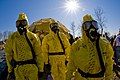
Hazmat suit is a piece of personal protective equipment that is designed to protect the wearer from hazardous materials or substances. The term "hazmat" is an abbreviation for "hazardous materials". Hazmat suits are used in a variety of settings, including chemical processing, nuclear power plants, and in the cleanup of hazardous waste. They are also used by emergency services, such as firefighters and paramedics, when dealing with incidents involving hazardous materials.
Design and Function
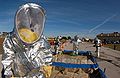
A hazmat suit is designed to protect the wearer from hazardous substances, which can include chemicals, radiation, biological materials, and physical hazards such as heat or falling debris. The suit is typically made from a durable, impermeable material that can resist penetration by the hazardous substance. Some suits also include a self-contained breathing apparatus (SCBA) to provide the wearer with a safe supply of air.
Hazmat suits are categorized based on the level of protection they provide. Level A suits offer the highest level of protection and are fully encapsulating, with a full-facepiece respirator or SCBA. Level B suits offer a lower level of protection and are not fully encapsulating, but still include a full-facepiece respirator or SCBA. Level C suits offer the lowest level of protection and may only include a half-face respirator.
Usage
Hazmat suits are used in a variety of industries and settings. In the chemical industry, they are used during the production, handling, and disposal of hazardous chemicals. In nuclear power plants, they are used to protect workers from radiation. They are also used in the cleanup of hazardous waste, such as after a chemical spill or nuclear accident.
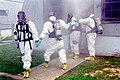
Emergency services also use hazmat suits when responding to incidents involving hazardous materials. This can include chemical or biological attacks, industrial accidents, or natural disasters that have resulted in the release of hazardous substances.
See Also
References

This safety related article is a stub. You can help WikiMD by expanding it.
-
 091108-F-8594F-797 (4100783730)
 -
 Paul Fürst, Der Doctor Schnabel von Rom (Holländer version)
 -
 Hazmat suit c1918
 -
 Chemical protection squad of the TMPD
 -
 FlashSuit
 -
 MHE - KBH Brandvaesen - HAZMAT 3a
 -
 Strahlenschutz uebung
 -
 Hazmat DEA
.jpg)
.png)


Ad. Transform your health with W8MD Weight Loss, Sleep & MedSpa

Tired of being overweight?
Special offer:
Budget GLP-1 weight loss medications
- Semaglutide starting from $29.99/week and up with insurance for visit of $59.99 and up per week self pay.
- Tirzepatide starting from $45.00/week and up (dose dependent) or $69.99/week and up self pay
✔ Same-week appointments, evenings & weekends ✔ Tele visits available with certain limitations Learn more:
- GLP-1 weight loss clinic NYC
- W8MD's NYC medical weight loss
- W8MD Philadelphia GLP-1 shots
- Philadelphia GLP-1 injections
- Affordable GLP-1 shots NYC
- Budget GLP-1 shots
|
WikiMD Medical Encyclopedia |
Medical Disclaimer: WikiMD is for informational purposes only and is not a substitute for professional medical advice. Content may be inaccurate or outdated and should not be used for diagnosis or treatment. Always consult your healthcare provider for medical decisions. Verify information with trusted sources such as CDC.gov and NIH.gov. By using this site, you agree that WikiMD is not liable for any outcomes related to its content. See full disclaimer.
Credits:Most images are courtesy of Wikimedia commons, and templates, categories Wikipedia, licensed under CC BY SA or similar.
Translate this page: - East Asian
中文,
日本,
한국어,
South Asian
हिन्दी,
தமிழ்,
తెలుగు,
Urdu,
ಕನ್ನಡ,
Southeast Asian
Indonesian,
Vietnamese,
Thai,
မြန်မာဘာသာ,
বাংলা
European
español,
Deutsch,
français,
Greek,
português do Brasil,
polski,
română,
русский,
Nederlands,
norsk,
svenska,
suomi,
Italian
Middle Eastern & African
عربى,
Turkish,
Persian,
Hebrew,
Afrikaans,
isiZulu,
Kiswahili,
Other
Bulgarian,
Hungarian,
Czech,
Swedish,
മലയാളം,
मराठी,
ਪੰਜਾਬੀ,
ગુજરાતી,
Portuguese,
Ukrainian
