Corpus cavernosum of clitoris
Corpus cavernosum of clitoris is a part of the female genitalia that plays a crucial role in sexual arousal and orgasm. It is analogous to the corpus cavernosum in males.
Anatomy
The corpus cavernosum of clitoris is a pair of sponge-like regions of erectile tissue which contain most of the blood in the clitoris during sexual arousal. It is located on either side of the vagina, and is internally divided into two sections by the clitoral septum.
The corpus cavernosum of clitoris is covered by the ischiocavernosus muscle, which aids in maintaining erection by contracting and compressing the deep dorsal vein of the clitoris.
Function
During sexual arousal, the corpus cavernosum of clitoris fills with blood, causing the clitoris to swell and become erect. This is similar to the process that occurs in the penis during male sexual arousal. The erection of the clitoris enhances sexual sensation and contributes to female orgasm.
Clinical significance
Understanding the anatomy and function of the corpus cavernosum of clitoris is important in the field of sexual medicine. It can help in the diagnosis and treatment of sexual disorders such as female sexual dysfunction and clitoral priapism, a rare condition where the erection does not subside after sexual arousal.
See also

-
 Clitoral body, internal anatomy
 -
 Clitoral anatomy updated
 -
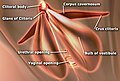 EdSim Clitoris anatomy


Ad. Transform your health with W8MD Weight Loss, Sleep & MedSpa

Tired of being overweight?
Get started with evidence based, physician-supervised
affordable GLP-1 weight loss injections
Now available in New York City and Philadelphia:
- Semaglutide starting from $59.99/week and up
- Tirzepatide starting from $69.99/week and up (dose dependent)
✔ Evidence-based medical weight loss ✔ Insurance-friendly visits available ✔ Same-week appointments, evenings & weekends
Learn more:
Start your transformation today with W8MD weight loss centers.
|
WikiMD Medical Encyclopedia |
Medical Disclaimer: WikiMD is for informational purposes only and is not a substitute for professional medical advice. Content may be inaccurate or outdated and should not be used for diagnosis or treatment. Always consult your healthcare provider for medical decisions. Verify information with trusted sources such as CDC.gov and NIH.gov. By using this site, you agree that WikiMD is not liable for any outcomes related to its content. See full disclaimer.
Credits:Most images are courtesy of Wikimedia commons, and templates, categories Wikipedia, licensed under CC BY SA or similar.
Translate this page: - East Asian
中文,
日本,
한국어,
South Asian
हिन्दी,
தமிழ்,
తెలుగు,
Urdu,
ಕನ್ನಡ,
Southeast Asian
Indonesian,
Vietnamese,
Thai,
မြန်မာဘာသာ,
বাংলা
European
español,
Deutsch,
français,
Greek,
português do Brasil,
polski,
română,
русский,
Nederlands,
norsk,
svenska,
suomi,
Italian
Middle Eastern & African
عربى,
Turkish,
Persian,
Hebrew,
Afrikaans,
isiZulu,
Kiswahili,
Other
Bulgarian,
Hungarian,
Czech,
Swedish,
മലയാളം,
मराठी,
ਪੰਜਾਬੀ,
ગુજરાતી,
Portuguese,
Ukrainian
