Jazz Age
Jazz Age
The Jazz Age was a period in the 1920s and 1930s in which jazz music and dance styles rapidly gained nationwide popularity in the United States. The Jazz Age's cultural repercussions were primarily felt in the United States, the birthplace of jazz. Originating in New Orleans, jazz soon spread to Chicago, New York City, and across the country.
Origins
The Jazz Age is often associated with the Roaring Twenties, a post-World War I period of prosperity and growth. The term "Jazz Age" was coined by F. Scott Fitzgerald, who saw the period as characterized by a general loosening of social structures. The movement was largely affected by the introduction of radio and the rise of the advertising industry.
Cultural Impact
The Jazz Age had a significant cultural impact, influencing fashion, language, and the arts. Women's fashion became more liberal, with flapper styles and bobbed hair becoming popular. The period also saw a shift in language, with new slang terms emerging. The Jazz Age also had a profound impact on the arts, particularly literature, with authors like Ernest Hemingway and F. Scott Fitzgerald gaining prominence.
End of the Jazz Age
The Jazz Age is often said to have ended with the onset of the Great Depression in 1929. However, the influence of jazz music and culture continued to spread internationally, influencing many aspects of society and culture.
See Also
References
<references />
This 1930s related article is a stub. You can help WikiMD by expanding it.


-
 Carter and King Jazzing Orchestra
 -
 Tales of the Jazz Age by John Held, 1922
 -
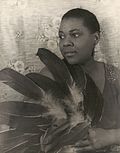 Bessie Smith, 1936 by Carl Van Vechten
 -
 Fate Marable's New Orleans Band on the S. S. Sidney
 -
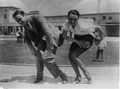 Frank Farnum coaching Pauline Starke
 -
 Mandy (Louis Armstrong)


_by_Carl_Van_Vechten.jpg)


Ad. Transform your life with W8MD's
GLP-1 weight loss injections special from $29.99 with insurance
|
WikiMD Medical Encyclopedia |
Medical Disclaimer: WikiMD is for informational purposes only and is not a substitute for professional medical advice. Content may be inaccurate or outdated and should not be used for diagnosis or treatment. Always consult your healthcare provider for medical decisions. Verify information with trusted sources such as CDC.gov and NIH.gov. By using this site, you agree that WikiMD is not liable for any outcomes related to its content. See full disclaimer.
Credits:Most images are courtesy of Wikimedia commons, and templates, categories Wikipedia, licensed under CC BY SA or similar.
Translate this page: - East Asian
中文,
日本,
한국어,
South Asian
हिन्दी,
தமிழ்,
తెలుగు,
Urdu,
ಕನ್ನಡ,
Southeast Asian
Indonesian,
Vietnamese,
Thai,
မြန်မာဘာသာ,
বাংলা
European
español,
Deutsch,
français,
Greek,
português do Brasil,
polski,
română,
русский,
Nederlands,
norsk,
svenska,
suomi,
Italian
Middle Eastern & African
عربى,
Turkish,
Persian,
Hebrew,
Afrikaans,
isiZulu,
Kiswahili,
Other
Bulgarian,
Hungarian,
Czech,
Swedish,
മലയാളം,
मराठी,
ਪੰਜਾਬੀ,
ગુજરાતી,
Portuguese,
Ukrainian
