Fungivore
Fungivore
A Fungivore is an organism that consumes fungi. This term is used to describe a wide range of organisms, including certain insects, mammals, and birds. Fungivores play a crucial role in ecosystems, contributing to the decomposition of organic matter and the recycling of nutrients.
Characteristics
Fungivores are characterized by their diet, which primarily consists of fungi. They have evolved various adaptations to exploit this food source, such as specialized mouthparts in insects and digestive enzymes in mammals and birds that can break down fungal cell walls.
Examples
Some examples of fungivores include the fungus gnat, which lays its eggs in fungi, and the red squirrel, which eats truffles. Some birds, such as the New Zealand rock wren, are also known to eat fungi.
Ecological role
Fungivores play a significant role in ecosystems by helping to decompose organic matter and recycle nutrients. They also help to control fungal populations, preventing them from becoming too dominant.
See also
References
<references />

-
 Lehmannia nyctelia
 -
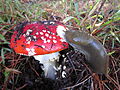 Amanita amerimuscaria
 -
 Euprenolepis procera feeding
 -
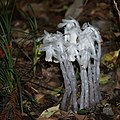 Monotropastrum humile
 -
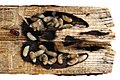 Xylosandrus crassiusculus gallery
 -
 Termitomyces reticulatus


Ad. Transform your health with W8MD Weight Loss, Sleep & MedSpa

Tired of being overweight?
Get started with evidence based, physician-supervised
affordable GLP-1 weight loss injections
Now available in New York City and Philadelphia:
- Semaglutide starting from $59.99/week and up
- Tirzepatide starting from $69.99/week and up (dose dependent)
✔ Evidence-based medical weight loss ✔ Insurance-friendly visits available ✔ Same-week appointments, evenings & weekends
Learn more:
Start your transformation today with W8MD weight loss centers.
|
WikiMD Medical Encyclopedia |
Medical Disclaimer: WikiMD is for informational purposes only and is not a substitute for professional medical advice. Content may be inaccurate or outdated and should not be used for diagnosis or treatment. Always consult your healthcare provider for medical decisions. Verify information with trusted sources such as CDC.gov and NIH.gov. By using this site, you agree that WikiMD is not liable for any outcomes related to its content. See full disclaimer.
Credits:Most images are courtesy of Wikimedia commons, and templates, categories Wikipedia, licensed under CC BY SA or similar.
Translate this page: - East Asian
中文,
日本,
한국어,
South Asian
हिन्दी,
தமிழ்,
తెలుగు,
Urdu,
ಕನ್ನಡ,
Southeast Asian
Indonesian,
Vietnamese,
Thai,
မြန်မာဘာသာ,
বাংলা
European
español,
Deutsch,
français,
Greek,
português do Brasil,
polski,
română,
русский,
Nederlands,
norsk,
svenska,
suomi,
Italian
Middle Eastern & African
عربى,
Turkish,
Persian,
Hebrew,
Afrikaans,
isiZulu,
Kiswahili,
Other
Bulgarian,
Hungarian,
Czech,
Swedish,
മലയാളം,
मराठी,
ਪੰਜਾਬੀ,
ગુજરાતી,
Portuguese,
Ukrainian
