Friand
Friand is a small, moist, almond-flavored cake that originated in France and is popular in Australia and New Zealand. The term "friand" translates to "gourmet" or "connoisseur" in English, reflecting the cake's rich, delicate nature.
History
The exact origins of the friand are unclear, but it is believed to have been inspired by the French financier, a similar almond-based pastry. The friand became popular in Australia and New Zealand in the late 20th century, where it is often served in cafes and bakeries.
Preparation and Varieties
Friands are typically made with a base of almond meal, butter, egg whites, and icing sugar. The mixture is baked in small, oval-shaped molds, although other shapes such as rectangles or circles may also be used.
While the traditional friand is plain and almond-flavored, many variations exist. Some popular additions include blueberries, raspberries, lemon zest, and chocolate. In Australia and New Zealand, it is common to see friands topped with a variety of fruits, nuts, or even a dusting of icing sugar.
Serving
Friands are typically served at room temperature and are often enjoyed with a cup of coffee or tea. They are a popular choice for breakfast, brunch, or a sweet afternoon snack.
See Also
References
<references />

-
 Blueberry Friand, Australia, January 2006
 -
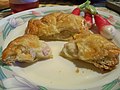 Friand 2
 -
 Gelato University (aula)


.jpg)
Ad. Transform your life with W8MD's
GLP-1 weight loss injections special from $29.99 with insurance
|
WikiMD Medical Encyclopedia |
Medical Disclaimer: WikiMD is for informational purposes only and is not a substitute for professional medical advice. Content may be inaccurate or outdated and should not be used for diagnosis or treatment. Always consult your healthcare provider for medical decisions. Verify information with trusted sources such as CDC.gov and NIH.gov. By using this site, you agree that WikiMD is not liable for any outcomes related to its content. See full disclaimer.
Credits:Most images are courtesy of Wikimedia commons, and templates, categories Wikipedia, licensed under CC BY SA or similar.
Translate this page: - East Asian
中文,
日本,
한국어,
South Asian
हिन्दी,
தமிழ்,
తెలుగు,
Urdu,
ಕನ್ನಡ,
Southeast Asian
Indonesian,
Vietnamese,
Thai,
မြန်မာဘာသာ,
বাংলা
European
español,
Deutsch,
français,
Greek,
português do Brasil,
polski,
română,
русский,
Nederlands,
norsk,
svenska,
suomi,
Italian
Middle Eastern & African
عربى,
Turkish,
Persian,
Hebrew,
Afrikaans,
isiZulu,
Kiswahili,
Other
Bulgarian,
Hungarian,
Czech,
Swedish,
മലയാളം,
मराठी,
ਪੰਜਾਬੀ,
ગુજરાતી,
Portuguese,
Ukrainian
