Shoe
Shoe
A shoe is an item of footwear intended to protect and comfort the human foot. Shoes are also used as an item of decoration and fashion. The design of shoes has varied enormously through time and from culture to culture, with appearance originally being tied to function.
History
The earliest known shoes are sagebrush bark sandals dating from approximately 7000 or 8000 BC, found in the Fort Rock Cave in the US state of Oregon in 1938. The world's oldest leather shoe, made from a single piece of cowhide laced with a leather cord along seams at the front and back, was found in the Areni-1 cave complex in Armenia in 2008 and is believed to date to 3500 BC.
Types
There are a vast variety of shoes, including dress shoes, boots, sneakers, sandals, and many more. Each of these have their own subcategories and are designed for specific activities, occasions, or professions.
Construction
Shoes are constructed in a variety of ways, primarily depending on their intended use. For example, dress shoes are typically made from leather or suede, while athletic shoes are often made of synthetic materials that are lightweight and breathable.
Health and environment
Shoes can have a significant impact on foot health and the environment. Ill-fitting shoes can cause a number of health problems, including bunions, corns, and hammer toe. The shoe industry also has a significant environmental impact, particularly in terms of the use of natural resources, pollution, and waste.
See also
 | |
|---|---|
 |
 |
Shoe
-
 Shoes from 1700 to 1960
 -
 Chalcolithic leather shoe from Areni-1 cave
 -
 Esparto sandals
 -
 Roman wall in Scotland
 -
 Shoe of indigenous soldier Legio II Augusta
 -
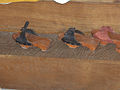 Walraversijde shoe
 -
 Shoemaker 1821
 -
 Woman's shoe, China, late 19th to early 20th century
 -
 Bottoming room
 -
 The Shoe for '96
 -
 Attila Elina Linkopuu
 -
 Shoe house


.jpg)


.jpg)

Ad. Transform your life with W8MD's
GLP-1 weight loss injections special from $29.99 with insurance
|
WikiMD Medical Encyclopedia |
Medical Disclaimer: WikiMD is for informational purposes only and is not a substitute for professional medical advice. Content may be inaccurate or outdated and should not be used for diagnosis or treatment. Always consult your healthcare provider for medical decisions. Verify information with trusted sources such as CDC.gov and NIH.gov. By using this site, you agree that WikiMD is not liable for any outcomes related to its content. See full disclaimer.
Credits:Most images are courtesy of Wikimedia commons, and templates, categories Wikipedia, licensed under CC BY SA or similar.
Translate this page: - East Asian
中文,
日本,
한국어,
South Asian
हिन्दी,
தமிழ்,
తెలుగు,
Urdu,
ಕನ್ನಡ,
Southeast Asian
Indonesian,
Vietnamese,
Thai,
မြန်မာဘာသာ,
বাংলা
European
español,
Deutsch,
français,
Greek,
português do Brasil,
polski,
română,
русский,
Nederlands,
norsk,
svenska,
suomi,
Italian
Middle Eastern & African
عربى,
Turkish,
Persian,
Hebrew,
Afrikaans,
isiZulu,
Kiswahili,
Other
Bulgarian,
Hungarian,
Czech,
Swedish,
മലയാളം,
मराठी,
ਪੰਜਾਬੀ,
ગુજરાતી,
Portuguese,
Ukrainian
