Vascular anomaly
A group of disorders involving abnormal blood vessels or lymph vessels
Vascular anomaly refers to a group of disorders characterized by abnormal development of blood vessels or lymphatic vessels. These anomalies can be broadly classified into vascular tumors and vascular malformations. They can occur anywhere in the body and vary widely in their clinical presentation, prognosis, and treatment.
Classification
Vascular anomalies are generally classified into two main categories:
Vascular Tumors
Vascular tumors are characterized by increased endothelial cell turnover. The most common type is the hemangioma, which typically appears shortly after birth, grows rapidly, and then involutes over time. Other types include pyogenic granuloma and Kaposiform hemangioendothelioma.
Vascular Malformations
Vascular malformations are present at birth and grow proportionately with the child. They are further classified based on the type of vessel involved:
- Capillary malformations: Commonly known as port-wine stains.
- Venous malformations: Abnormal veins that can cause pain and swelling.
- Lymphatic malformations: Abnormal lymph vessels, which can lead to swelling and fluid accumulation.
- Arteriovenous malformations: Abnormal connections between arteries and veins, which can lead to bleeding and other complications.
Diagnosis
Diagnosis of vascular anomalies typically involves a combination of clinical examination, imaging studies such as ultrasound, MRI, and sometimes biopsy. The specific type of anomaly often dictates the diagnostic approach.
Treatment
Treatment varies depending on the type and severity of the vascular anomaly. Options include:
- Observation: Many hemangiomas resolve spontaneously without intervention.
- Medical therapy: Medications such as propranolol are used for certain hemangiomas.
- Sclerotherapy: Injection of a sclerosing agent to shrink the malformation.
- Surgery: Reserved for cases where other treatments are ineffective or when the anomaly causes significant symptoms.
Prognosis
The prognosis for individuals with vascular anomalies depends on the type and location of the anomaly. Many hemangiomas resolve without treatment, while some malformations may require ongoing management.
Related pages
Gallery
-
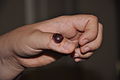 Pyogenic granuloma on the thumb
 -
 Example of a vascular anomaly on the hand
 -
 Lymphangioma


References
- Mulliken, J. B., & Glowacki, J. (1982). Hemangiomas and vascular malformations in infants and children: a classification based on endothelial characteristics. Plastic and Reconstructive Surgery, 69(3), 412-422.
- Enjolras, O., & Mulliken, J. B. (1997). Vascular tumors and vascular malformations (new issues). Advances in Dermatology, 13, 375-423.
Ad. Transform your health with W8MD Weight Loss, Sleep & MedSpa

Tired of being overweight?
Get started with evidence based, physician-supervised
affordable GLP-1 weight loss injections
Now available in New York City and Philadelphia:
- Semaglutide starting from $59.99/week and up
- Tirzepatide starting from $69.99/week and up (dose dependent)
✔ Evidence-based medical weight loss ✔ Insurance-friendly visits available ✔ Same-week appointments, evenings & weekends
Learn more:
Start your transformation today with W8MD weight loss centers.
|
WikiMD Medical Encyclopedia |
Medical Disclaimer: WikiMD is for informational purposes only and is not a substitute for professional medical advice. Content may be inaccurate or outdated and should not be used for diagnosis or treatment. Always consult your healthcare provider for medical decisions. Verify information with trusted sources such as CDC.gov and NIH.gov. By using this site, you agree that WikiMD is not liable for any outcomes related to its content. See full disclaimer.
Credits:Most images are courtesy of Wikimedia commons, and templates, categories Wikipedia, licensed under CC BY SA or similar.
Translate this page: - East Asian
中文,
日本,
한국어,
South Asian
हिन्दी,
தமிழ்,
తెలుగు,
Urdu,
ಕನ್ನಡ,
Southeast Asian
Indonesian,
Vietnamese,
Thai,
မြန်မာဘာသာ,
বাংলা
European
español,
Deutsch,
français,
Greek,
português do Brasil,
polski,
română,
русский,
Nederlands,
norsk,
svenska,
suomi,
Italian
Middle Eastern & African
عربى,
Turkish,
Persian,
Hebrew,
Afrikaans,
isiZulu,
Kiswahili,
Other
Bulgarian,
Hungarian,
Czech,
Swedish,
മലയാളം,
मराठी,
ਪੰਜਾਬੀ,
ગુજરાતી,
Portuguese,
Ukrainian
