Sea of Japan
Sea of Japan is a marginal sea located between the Asian continent, the Japanese archipelago and the Sakhalin island. It is bordered by Japan, North Korea, South Korea and Russia. The sea is connected to other parts of the Pacific Ocean by various straits.
Geography
The Sea of Japan is a large body of water surrounded by land on all sides, except for the south, where it is open to the Pacific Ocean. The sea is almost completely enclosed by land, with only narrow straits connecting it to the neighboring seas. The Tsushima Strait and the Korea Strait are the sea's connection to the East China Sea and the Pacific Ocean.
Hydrology
The Sea of Japan is characterized by its rich and diverse marine life. The sea's water is a mixture of cold water from the Okhotsk Sea and warm water from the Kuroshio Current. This mixture creates a unique environment that supports a wide variety of marine species.
History
Historically, the Sea of Japan has been a significant route for navigation and trade between the Asian continent and the Japanese archipelago. The sea has also been the site of numerous naval battles throughout history.
Name dispute
The name "Sea of Japan" is internationally recognized, including by the International Hydrographic Organization. However, the name is disputed by the governments of South Korea and North Korea, who prefer the name "East Sea" and "East Sea of Korea" respectively.
See also
 | |
|---|---|
 |
 |
-
 Sea of Japan Map
 -
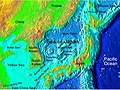 Sea of Japan Description
 -
 Sea of Japan Early Miocene Map
 -
 Sea of Japan Pliocene Map
 -
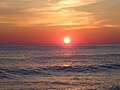 Full-orbed Sunrise over East Sea in South Korea
 -
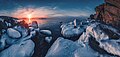 January Coast of the Sea of Japan in Khasansky District
 -
 Sibiryakova Bay
 -
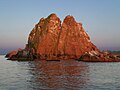 Sunset at Voivodsky
 -
 Von Karman Vortices off Rishiri Island, Japan
 -
 Tategami Rock
 -
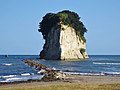 Mitsukejima (Ishikawa)
 -
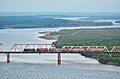 International Passenger Train on Tumen River Railway Bridge


_1.jpg)

Ad. Transform your life with W8MD's
GLP-1 weight loss injections special from $29.99 with insurance
|
WikiMD Medical Encyclopedia |
Medical Disclaimer: WikiMD is for informational purposes only and is not a substitute for professional medical advice. Content may be inaccurate or outdated and should not be used for diagnosis or treatment. Always consult your healthcare provider for medical decisions. Verify information with trusted sources such as CDC.gov and NIH.gov. By using this site, you agree that WikiMD is not liable for any outcomes related to its content. See full disclaimer.
Credits:Most images are courtesy of Wikimedia commons, and templates, categories Wikipedia, licensed under CC BY SA or similar.
Translate this page: - East Asian
中文,
日本,
한국어,
South Asian
हिन्दी,
தமிழ்,
తెలుగు,
Urdu,
ಕನ್ನಡ,
Southeast Asian
Indonesian,
Vietnamese,
Thai,
မြန်မာဘာသာ,
বাংলা
European
español,
Deutsch,
français,
Greek,
português do Brasil,
polski,
română,
русский,
Nederlands,
norsk,
svenska,
suomi,
Italian
Middle Eastern & African
عربى,
Turkish,
Persian,
Hebrew,
Afrikaans,
isiZulu,
Kiswahili,
Other
Bulgarian,
Hungarian,
Czech,
Swedish,
മലയാളം,
मराठी,
ਪੰਜਾਬੀ,
ગુજરાતી,
Portuguese,
Ukrainian
