Melon
Melon is a term used to describe various types of fruit in the family Cucurbitaceae. The word "melon" can refer to either the plant or specifically to the fruit. Botanically, a melon is a kind of berry, specifically a "pepo". The word melon derives from Latin melopepo, which is the latinization of the Greek μηλοπέπων (mēlopepōn), meaning "melon", itself a compound of μῆλον (mēlon), "apple, treefruit (of any kind)" and πέπων (pepōn), amongst others "a kind of gourd or melon".
History
Melons originated in Africa and southwest Asia, but they gradually began to appear in Europe toward the end of the Roman Empire. Melons were among the earliest plants to be domesticated in both the Old and New Worlds. Early European settlers in the New World are recorded as growing honeydew and casaba melons as early as the 1600s.
Types of Melons
There are many different types of melons. Some of the more common types include the Cantaloupe, Honeydew, Watermelon, and Crenshaw. Less common types include the Gac, Bitter melon, and Horned melon.
Cultivation
Melons are typically grown from seeds. The plants have a growth habit similar to that of other Cucurbitaceae family members such as cucumbers and squash. They are often grown in a "hill" or mound of soil.
Nutritional Value
Melons are low in calories and fat, but high in essential vitamins and minerals. They contain almost no cholesterol or sodium.
See Also
 | |
|---|---|
 |
 |
Melon
-
 Cantaloupe and canary melon
 -
 Watermelon and melon in India
 -
 Cucumis metuliferus fruit - whole and cross section
 -
 Cantaloupe Melon cross section
 -
 Painted green melons, Chennai, India, 2010
 -
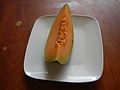 Melon
Melon -
 Cucumis melo inodorus argos
 -
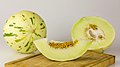 Melon Sugar Baby Matisse
 -
 Cucumis melo on white background
 -
 Honeydew melon yellow flower


Ad. Transform your life with W8MD's
GLP-1 weight loss injections special from $29.99 with insurance
|
WikiMD Medical Encyclopedia |
Medical Disclaimer: WikiMD is for informational purposes only and is not a substitute for professional medical advice. Content may be inaccurate or outdated and should not be used for diagnosis or treatment. Always consult your healthcare provider for medical decisions. Verify information with trusted sources such as CDC.gov and NIH.gov. By using this site, you agree that WikiMD is not liable for any outcomes related to its content. See full disclaimer.
Credits:Most images are courtesy of Wikimedia commons, and templates, categories Wikipedia, licensed under CC BY SA or similar.
Translate this page: - East Asian
中文,
日本,
한국어,
South Asian
हिन्दी,
தமிழ்,
తెలుగు,
Urdu,
ಕನ್ನಡ,
Southeast Asian
Indonesian,
Vietnamese,
Thai,
မြန်မာဘာသာ,
বাংলা
European
español,
Deutsch,
français,
Greek,
português do Brasil,
polski,
română,
русский,
Nederlands,
norsk,
svenska,
suomi,
Italian
Middle Eastern & African
عربى,
Turkish,
Persian,
Hebrew,
Afrikaans,
isiZulu,
Kiswahili,
Other
Bulgarian,
Hungarian,
Czech,
Swedish,
മലയാളം,
मराठी,
ਪੰਜਾਬੀ,
ગુજરાતી,
Portuguese,
Ukrainian
