Leaving group
Leaving Group
A Leaving group is a term in the field of organic chemistry that refers to an atom or group of atoms that departs with a pair of electrons in heterolytic bond cleavage. Leaving groups can be anions or neutral molecules, but in either case it is crucial that the leaving group be able to stabilize the additional electron density that results from bond heterolysis.
Characteristics of Good Leaving Groups
Good leaving groups are those that can stabilize the extra electron density that results from bond cleavage. This can be achieved through resonance, inductive effects, and by the presence of a full or partial positive charge.
Examples of Leaving Groups
Common leaving groups include halides such as Cl-, Br-, and I-, as well as sulfonate esters such as tosylate (OTs-) and mesylate (OMs-). Water (H2O) and alcohols (ROH) can also act as leaving groups under certain conditions.
Leaving Group Ability
The ability of a group to act as a leaving group can be influenced by a variety of factors, including the nature of the substrate, the solvent, and the specific reaction conditions. In general, the best leaving groups are those that are the weakest bases.
Leaving Group in Substitution and Elimination Reactions
In both substitution reactions and elimination reactions, the leaving group plays a crucial role. In a substitution reaction, the leaving group is replaced by a nucleophile, while in an elimination reaction, the leaving group departs along with a proton to form a pi bond.
See Also
References
<references />
 | |
|---|---|
 |
 |
-
 Three types of reactions involving leaving groups
 -
 Ionization reaction
 -
 Reaction of propyl halide with toluene thiolate
 -
 Reaction of ethyl halide with ethoxide
 -
 Activation of leaving group by Lewis acid complexation
 -
 E1cB reaction
 -
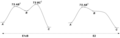 Elimination continuum
 -
 Reductive elimination involving leaving group


Ad. Transform your life with W8MD's
GLP-1 weight loss injections special from $29.99 with insurance
|
WikiMD Medical Encyclopedia |
Medical Disclaimer: WikiMD is for informational purposes only and is not a substitute for professional medical advice. Content may be inaccurate or outdated and should not be used for diagnosis or treatment. Always consult your healthcare provider for medical decisions. Verify information with trusted sources such as CDC.gov and NIH.gov. By using this site, you agree that WikiMD is not liable for any outcomes related to its content. See full disclaimer.
Credits:Most images are courtesy of Wikimedia commons, and templates, categories Wikipedia, licensed under CC BY SA or similar.
Translate this page: - East Asian
中文,
日本,
한국어,
South Asian
हिन्दी,
தமிழ்,
తెలుగు,
Urdu,
ಕನ್ನಡ,
Southeast Asian
Indonesian,
Vietnamese,
Thai,
မြန်မာဘာသာ,
বাংলা
European
español,
Deutsch,
français,
Greek,
português do Brasil,
polski,
română,
русский,
Nederlands,
norsk,
svenska,
suomi,
Italian
Middle Eastern & African
عربى,
Turkish,
Persian,
Hebrew,
Afrikaans,
isiZulu,
Kiswahili,
Other
Bulgarian,
Hungarian,
Czech,
Swedish,
മലയാളം,
मराठी,
ਪੰਜਾਬੀ,
ગુજરાતી,
Portuguese,
Ukrainian
