Pinus orizabensis
Pinus orizabensis
Pinus orizabensis is a species of pine tree native to Mexico. It is commonly known as the Orizaba Pinyon pine. This tree is part of the Pinaceae family and the Pinus genus.
Description
Pinus orizabensis is a medium-sized tree that typically grows to a height of 15-25 meters. The bark is thick and scaly, often with a reddish-brown color. The leaves, or needles, are arranged in bundles of five and are typically 7-12 cm long. The cones of the tree are ovoid in shape, measuring 5-7 cm in length.
Distribution and Habitat
The Orizaba Pinyon pine is endemic to Mexico, specifically in the states of Puebla and Veracruz. It grows at high altitudes, typically between 2,600 and 3,100 meters above sea level. The tree prefers well-drained soils and is often found in mixed coniferous forests.
Conservation Status
The International Union for Conservation of Nature (IUCN) has listed Pinus orizabensis as a species of least concern. However, like many other species of pine, it is threatened by habitat loss due to deforestation and climate change.
Uses
Pinus orizabensis has several uses. Its wood is used for construction and carpentry. The tree is also used for reforestation efforts in its native range. In addition, the seeds of the Orizaba Pinyon pine are edible and are often harvested by local communities.
See Also
References
- Farjon, A. (2013). Pinus orizabensis. The IUCN Red List of Threatened Species 2013.
- Perry, J.P. (1991). Pines of Mexico and Central America. Timber Press.
External Links
-
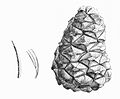 Illustration of Pinus orizabensis

Ad. Transform your life with W8MD's
GLP-1 weight loss injections special from $29.99 with insurance
|
WikiMD Medical Encyclopedia |
Medical Disclaimer: WikiMD is for informational purposes only and is not a substitute for professional medical advice. Content may be inaccurate or outdated and should not be used for diagnosis or treatment. Always consult your healthcare provider for medical decisions. Verify information with trusted sources such as CDC.gov and NIH.gov. By using this site, you agree that WikiMD is not liable for any outcomes related to its content. See full disclaimer.
Credits:Most images are courtesy of Wikimedia commons, and templates, categories Wikipedia, licensed under CC BY SA or similar.
Translate this page: - East Asian
中文,
日本,
한국어,
South Asian
हिन्दी,
தமிழ்,
తెలుగు,
Urdu,
ಕನ್ನಡ,
Southeast Asian
Indonesian,
Vietnamese,
Thai,
မြန်မာဘာသာ,
বাংলা
European
español,
Deutsch,
français,
Greek,
português do Brasil,
polski,
română,
русский,
Nederlands,
norsk,
svenska,
suomi,
Italian
Middle Eastern & African
عربى,
Turkish,
Persian,
Hebrew,
Afrikaans,
isiZulu,
Kiswahili,
Other
Bulgarian,
Hungarian,
Czech,
Swedish,
മലയാളം,
मराठी,
ਪੰਜਾਬੀ,
ગુજરાતી,
Portuguese,
Ukrainian
