Guntur district
Guntur District
Guntur district is located in the state of Andhra Pradesh, India. It is situated on the eastern coast of the country and is known for its rich cultural heritage, historical significance, and agricultural prosperity. The district is named after its administrative headquarters, Guntur city.
Geography
Guntur district is spread over an area of approximately 11,391 square kilometers. It is bordered by the Krishna district to the east, Prakasam district to the south, and Nalgonda and Khammam districts of Telangana to the west. The Bay of Bengal lies to the east of the district, providing it with a coastal stretch of about 100 kilometers.
The district is characterized by a diverse topography, with the eastern part being predominantly coastal plains, while the western part consists of hills and plateaus. The Krishna River flows through the district, dividing it into two regions - the Krishna Delta in the east and the upland region in the west.
History
Guntur district has a rich historical background, with evidence of human habitation dating back to the Neolithic era. The region has witnessed the rule of various dynasties, including the Satavahanas, Ikshvakus, Pallavas, Cholas, and Vijayanagara Empire.
During the British colonial period, Guntur district was a part of the Madras Presidency. It played a significant role in the freedom struggle of India, with many prominent leaders emerging from the region. After India gained independence in 1947, Guntur became a part of the state of Andhra Pradesh.
Economy
Agriculture is the primary occupation of the people in Guntur district. The fertile soil and favorable climatic conditions make it ideal for the cultivation of crops such as paddy, cotton, tobacco, and chillies. Guntur is known as the "Chilli Capital of India" due to its extensive production and export of chillies.
Apart from agriculture, the district also has a growing industrial sector. It is home to several industrial estates and special economic zones, attracting investments in sectors such as textiles, food processing, pharmaceuticals, and automobile components.
Tourism
Guntur district offers a range of tourist attractions for visitors. Some of the notable places to visit include:
- Amaravati - The ancient capital of the Satavahanas, known for its Buddhist heritage and the famous Amaravati Stupa.
- Undavalli Caves - A series of rock-cut caves adorned with intricate sculptures, dating back to the 4th-5th century.
- Kondaveedu Fort - A hilltop fort with ruins of ancient structures, offering panoramic views of the surrounding landscape.
- Mangalagiri - A pilgrimage site known for its ancient temple dedicated to Lord Narasimha.
- Nagarjuna Sagar Dam - One of the largest dams in India, built across the Krishna River, offering scenic views and boating facilities.
Administration
Guntur district is divided into three revenue divisions - Guntur, Tenali, and Narasaraopet. It is further divided into 57 mandals (administrative units) and 1,091 villages. The district is represented in the state legislative assembly by multiple constituencies.
Transport
Guntur district is well-connected by road, rail, and air. The National Highway 16 (NH 16) passes through the district, connecting it to major cities like Chennai and Kolkata. The Guntur Junction railway station is an important railway hub, with regular train services to various parts of the country. The nearest airport is the Vijayawada International Airport, located approximately 40 kilometers away.
References
External links
-
 Brahmi Script inscribed on a Railing Pillar at Velpuru
 -
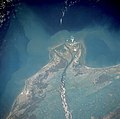 NASA image of Guntur
 -
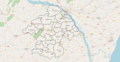 Map of Guntur district
 -
 Tobacco Drying at Grandhasiri village
 -
 Hindu college in Guntur
 -
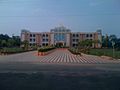 Acharya Nagarjuna
 -
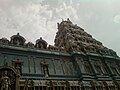 Ponnur Anjaneya Swamy Temple
 -
 Government General Hospital, Guntur


Ad. Transform your health with W8MD Weight Loss, Sleep & MedSpa

Tired of being overweight?
Special offer:
Budget GLP-1 weight loss medications
- Semaglutide starting from $29.99/week and up with insurance for visit of $59.99 and up per week self pay.
- Tirzepatide starting from $45.00/week and up (dose dependent) or $69.99/week and up self pay
✔ Same-week appointments, evenings & weekends
Learn more:
- GLP-1 weight loss clinic NYC
- W8MD's NYC medical weight loss
- W8MD Philadelphia GLP-1 shots
- Philadelphia GLP-1 injections
- Affordable GLP-1 shots NYC
|
WikiMD Medical Encyclopedia |
Medical Disclaimer: WikiMD is for informational purposes only and is not a substitute for professional medical advice. Content may be inaccurate or outdated and should not be used for diagnosis or treatment. Always consult your healthcare provider for medical decisions. Verify information with trusted sources such as CDC.gov and NIH.gov. By using this site, you agree that WikiMD is not liable for any outcomes related to its content. See full disclaimer.
Credits:Most images are courtesy of Wikimedia commons, and templates, categories Wikipedia, licensed under CC BY SA or similar.
Translate this page: - East Asian
中文,
日本,
한국어,
South Asian
हिन्दी,
தமிழ்,
తెలుగు,
Urdu,
ಕನ್ನಡ,
Southeast Asian
Indonesian,
Vietnamese,
Thai,
မြန်မာဘာသာ,
বাংলা
European
español,
Deutsch,
français,
Greek,
português do Brasil,
polski,
română,
русский,
Nederlands,
norsk,
svenska,
suomi,
Italian
Middle Eastern & African
عربى,
Turkish,
Persian,
Hebrew,
Afrikaans,
isiZulu,
Kiswahili,
Other
Bulgarian,
Hungarian,
Czech,
Swedish,
മലയാളം,
मराठी,
ਪੰਜਾਬੀ,
ગુજરાતી,
Portuguese,
Ukrainian
