Torc
Torc
A torc, also spelled torque, is a large rigid or stiff neck ring in metal, made either as a single piece or from strands twisted together. The great majority are open at the front, although some have hook and ring closures and a few have mortice and tenon locking devices. They are found in the European Iron Age, from around the 8th century BC to the 3rd century AD, and are most often associated with the Celtic culture.
History
Torcs were worn by various peoples across Europe, including the Celts, Scythians, and Thracians. They were typically made of gold, silver, bronze, or other metals, and were often richly decorated. The torc was a symbol of status and power, often worn by warriors and leaders. The Romans also adopted the torc as a military decoration.
Celtic Torcs
Celtic torcs are among the most famous, with notable examples found in Ireland, Britain, and France. The Snettisham Hoard in Norfolk, England, is one of the most significant finds, containing numerous gold torcs. The Stirling Hoard in Scotland is another important discovery, featuring beautifully crafted gold torcs.
Roman and Other Cultures
The Romans awarded torcs to soldiers as a mark of valor. The Dying Gaul, a famous Roman sculpture, depicts a Gallic warrior wearing a torc. Other cultures, such as the Scythians and Thracians, also produced torcs, often with distinctive styles and motifs.
Design and Manufacture
Torcs were typically made by twisting metal rods together or by casting. They could be plain or highly decorated, with designs including Celtic knots, animal motifs, and geometric patterns. The ends of the torc, known as terminals, were often elaborately decorated with animal heads or abstract designs.
Function and Symbolism
Torcs were primarily worn as jewelry, but they also held significant symbolic meaning. They were often associated with nobility and warrior status, and in some cultures, they were believed to have protective or magical properties. The torc was a visible sign of wealth and power, and in some cases, it was used as a form of currency or tribute.
Related Pages
References
- Megaw, Ruth and Vincent. "Celtic Art: From Its Beginnings to the Book of Kells." Thames & Hudson, 2001.
- Green, Miranda J. "Celtic Myths." University of Texas Press, 1993.
- Cunliffe, Barry. "The Ancient Celts." Oxford University Press, 1997.
Gallery
-
 Head of the Dying Gaul
 -
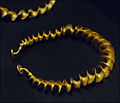 Gold Torc from the Stirling Hoard
 -
 Lambourne Hoard
 -
 Roman statue depicting a man wearing a torc
 -
 Gold torque
 -
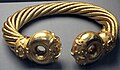 Snettisham Hoard
 -
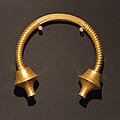 Torques de Burela, Museo Provincial de Lugo
 -
 Iron Age Torc
 -
 Prosnes tomb, 300 BC
 -
 Torc, Kansas City Museum of Art
 -
 Uttendorf Halsreifen, Linz Schlossmuseum
 -
 Oxus chariot model
 -
 Torque from Susa, Louvre
 -
 Gold torque
 -
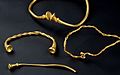 Leekfrith Torcs
 -
 Torque de Foxados
 -
 Torque de Santa Tegra
 -
 Stirling Hoard
 -
 Galician Celtic torc
 -
 Silver torque
 -
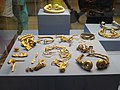 Snettisham Hoard
 -
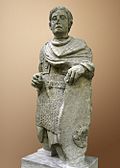 Gaul warrior, Vacheres
 -
 Ipswich Hoard
 -
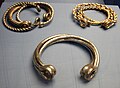 Snettisham Hoard
 -
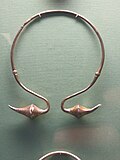 Cordoba Treasure
 -
 Lochar Moss Collar
 -
 Celtic torque found in the Marche
.jpg)
.jpg)

.jpg)


.jpg)


.jpg)


.JPG)


Ad. Transform your life with W8MD's
GLP-1 weight loss injections special from $29.99 with insurance
|
WikiMD Medical Encyclopedia |
Medical Disclaimer: WikiMD is for informational purposes only and is not a substitute for professional medical advice. Content may be inaccurate or outdated and should not be used for diagnosis or treatment. Always consult your healthcare provider for medical decisions. Verify information with trusted sources such as CDC.gov and NIH.gov. By using this site, you agree that WikiMD is not liable for any outcomes related to its content. See full disclaimer.
Credits:Most images are courtesy of Wikimedia commons, and templates, categories Wikipedia, licensed under CC BY SA or similar.
Translate this page: - East Asian
中文,
日本,
한국어,
South Asian
हिन्दी,
தமிழ்,
తెలుగు,
Urdu,
ಕನ್ನಡ,
Southeast Asian
Indonesian,
Vietnamese,
Thai,
မြန်မာဘာသာ,
বাংলা
European
español,
Deutsch,
français,
Greek,
português do Brasil,
polski,
română,
русский,
Nederlands,
norsk,
svenska,
suomi,
Italian
Middle Eastern & African
عربى,
Turkish,
Persian,
Hebrew,
Afrikaans,
isiZulu,
Kiswahili,
Other
Bulgarian,
Hungarian,
Czech,
Swedish,
മലയാളം,
मराठी,
ਪੰਜਾਬੀ,
ગુજરાતી,
Portuguese,
Ukrainian
