Clitellum
Clitellum
The clitellum is a specialized reproductive structure found in certain groups of annelids, including earthworms and leeches. It is a prominent, saddle-shaped swelling located near the anterior end of the body. The clitellum plays a crucial role in the reproduction and development of these organisms.
Anatomy
The clitellum is typically composed of several segments, varying in number depending on the species. It is usually located between segments 32 and 37 in earthworms, while in leeches, it can be found between segments 9 and 12. The size, shape, and coloration of the clitellum can also differ among species.
Reproduction
The primary function of the clitellum is to produce a cocoon for the deposition of eggs and sperm during sexual reproduction. Earthworms and leeches are hermaphroditic, meaning they possess both male and female reproductive organs. However, cross-fertilization between individuals is still required for successful reproduction.
During mating, two individuals align their ventral surfaces and exchange sperm. The clitellum then secretes a mucus-like substance that forms a protective cocoon around the fertilized eggs. This cocoon eventually hardens and becomes a protective casing for the developing embryos.
Development
Within the cocoon, the embryos undergo a process of development. The clitellum secretes albumin, a protein-rich substance that provides nourishment to the developing embryos. As the embryos grow, they absorb the albumin and develop into juvenile worms or leeches.
After a period of incubation, the young worms or leeches emerge from the cocoon and begin their independent lives. The clitellum is shed shortly after cocoon formation, and a new one is regenerated for subsequent reproductive cycles.
Importance
The clitellum is a crucial adaptation for the successful reproduction and survival of earthworms and leeches. It ensures the protection and development of the embryos, increasing their chances of survival. Additionally, the cocoon provides a means of dispersal for these organisms, as it can be transported to new habitats by various means, such as water currents or animal movement.
References
<references />
See also
-
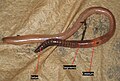 Labeled segments of an earthworm
 -
 Lumbricus rubellus
 -
 Philobdella floridana


_Figure_4.png)
Ad. Transform your life with W8MD's
GLP-1 weight loss injections special from $29.99 with insurance
|
WikiMD Medical Encyclopedia |
Medical Disclaimer: WikiMD is for informational purposes only and is not a substitute for professional medical advice. Content may be inaccurate or outdated and should not be used for diagnosis or treatment. Always consult your healthcare provider for medical decisions. Verify information with trusted sources such as CDC.gov and NIH.gov. By using this site, you agree that WikiMD is not liable for any outcomes related to its content. See full disclaimer.
Credits:Most images are courtesy of Wikimedia commons, and templates, categories Wikipedia, licensed under CC BY SA or similar.
Translate this page: - East Asian
中文,
日本,
한국어,
South Asian
हिन्दी,
தமிழ்,
తెలుగు,
Urdu,
ಕನ್ನಡ,
Southeast Asian
Indonesian,
Vietnamese,
Thai,
မြန်မာဘာသာ,
বাংলা
European
español,
Deutsch,
français,
Greek,
português do Brasil,
polski,
română,
русский,
Nederlands,
norsk,
svenska,
suomi,
Italian
Middle Eastern & African
عربى,
Turkish,
Persian,
Hebrew,
Afrikaans,
isiZulu,
Kiswahili,
Other
Bulgarian,
Hungarian,
Czech,
Swedish,
മലയാളം,
मराठी,
ਪੰਜਾਬੀ,
ગુજરાતી,
Portuguese,
Ukrainian
