Juvenile nephronophthisis: Difference between revisions
CSV import |
No edit summary |
||
| Line 21: | Line 21: | ||
{{rarediseases}} | {{rarediseases}} | ||
<gallery> | <gallery> | ||
File:Autosomal_recessive_-_en.svg|Autosomal recessive inheritance pattern | File:Autosomal_recessive_-_en.svg|Autosomal recessive inheritance pattern | ||
</gallery> | </gallery> | ||
Revision as of 00:12, 17 March 2025
Juvenile nephronophthisis is a rare, inherited kidney disorder that primarily affects children and young adults. It is characterized by the inflammation and scarring of the nephrons, the functional units within the kidneys that are responsible for filtering waste from the blood and producing urine. This condition is a form of cystic kidney disease, where cysts develop in the kidneys as the disease progresses. Juvenile nephronophthisis is the most common genetic cause of chronic kidney disease (CKD) in children and adolescents.
Causes
Juvenile nephronophthisis is primarily caused by mutations in the NPHP1 gene, although mutations in other genes have also been associated with the disease. It is inherited in an autosomal recessive manner, meaning that an individual must inherit two copies of the mutated gene, one from each parent, to be affected by the condition.
Symptoms
The symptoms of juvenile nephronophthisis often begin in early childhood, although they can vary widely in severity and onset. Common symptoms include excessive thirst and urination, growth retardation, and fatigue. As the disease progresses, it can lead to more serious complications such as anemia, bone abnormalities, and ultimately, end-stage kidney disease (ESKD), necessitating dialysis or a kidney transplant.
Diagnosis
Diagnosis of juvenile nephronophthisis typically involves a combination of clinical evaluation, family history, genetic testing, and imaging studies such as ultrasound. The presence of characteristic cysts in the kidneys, along with a history of similar symptoms in family members, can help in diagnosing the condition.
Treatment
There is currently no cure for juvenile nephronophthisis, and treatment focuses on managing symptoms and slowing the progression of kidney damage. This may include medications to control blood pressure, treat anemia, and balance electrolytes. In advanced cases, dialysis or a kidney transplant may be necessary to replace kidney function.
Prognosis
The prognosis for individuals with juvenile nephronophthisis varies depending on the severity of the disease and the age at which symptoms begin. Early diagnosis and treatment can help manage symptoms and delay the progression to end-stage kidney disease. However, most individuals with juvenile nephronophthisis will eventually require dialysis or a kidney transplant.
NIH genetic and rare disease info
Juvenile nephronophthisis is a rare disease.
| Rare and genetic diseases | ||||||
|---|---|---|---|---|---|---|
|
Rare diseases - Juvenile nephronophthisis
|
-
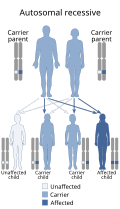 Autosomal recessive inheritance pattern

