Hippocampal sclerosis: Difference between revisions
CSV import |
No edit summary |
||
| Line 37: | Line 37: | ||
[[Category:Epilepsy]] | [[Category:Epilepsy]] | ||
[[Category:Alzheimer's disease]] | [[Category:Alzheimer's disease]] | ||
<gallery> | <gallery> | ||
File:Left Hippocampal Sclerosis on MRI.jpg|Hippocampal sclerosis | File:Left Hippocampal Sclerosis on MRI.jpg|Hippocampal sclerosis | ||
</gallery> | </gallery> | ||
Revision as of 23:49, 16 March 2025
Hippocampal sclerosis is a neurological condition characterized by specific loss of neurons in the hippocampus, which can lead to epilepsy and memory loss. It is often associated with temporal lobe epilepsy and Alzheimer's disease.
Etiology
The exact cause of hippocampal sclerosis is unknown. However, it is believed to be associated with prolonged seizure activity, brain injury, infections, stroke, and Alzheimer's disease.
Symptoms
The primary symptoms of hippocampal sclerosis include memory loss, confusion, and seizures. These symptoms can vary in severity depending on the extent of neuronal loss in the hippocampus.
Diagnosis
Hippocampal sclerosis is typically diagnosed through neuroimaging techniques such as MRI and CT scan. These imaging studies can reveal atrophy or shrinkage of the hippocampus, which is indicative of the condition.
Treatment
Treatment for hippocampal sclerosis primarily involves managing the symptoms. This can include antiepileptic drugs for seizure control and cognitive therapy for memory loss. In severe cases, surgery may be considered to remove the affected part of the hippocampus.
Prognosis
The prognosis for individuals with hippocampal sclerosis varies. Some individuals may experience significant improvement with treatment, while others may continue to experience symptoms despite treatment. The prognosis is generally better for those who are diagnosed and treated early.
See also
References
<references />
 |
 |
-
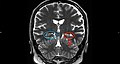 Hippocampal sclerosis


