Freedom of information: Difference between revisions
CSV import |
|||
| Line 29: | Line 29: | ||
* [[Open government]] | * [[Open government]] | ||
* [[Data protection]] | * [[Data protection]] | ||
[[Category:Freedom of information]] | [[Category:Freedom of information]] | ||
[[Category:Human rights]] | [[Category:Human rights]] | ||
[[Category:Government transparency]] | [[Category:Government transparency]] | ||
<gallery> | <gallery> | ||
File:Sample 09-F9 protest art, Free Speech Flag by John Marcotte.svg|Free Speech Flag by John Marcotte | File:Sample 09-F9 protest art, Free Speech Flag by John Marcotte.svg|Free Speech Flag by John Marcotte | ||
File:Member States that are Party to the UN Convention against Corruption.svg|Member States that are Party to the UN Convention against Corruption | File:Member States that are Party to the UN Convention against Corruption.svg|Member States that are Party to the UN Convention against Corruption | ||
File:Percentage of individuals using the internet 2012-2017.svg|Percentage of individuals using the internet 2012-2017 | File:Percentage of individuals using the internet 2012-2017.svg|Percentage of individuals using the internet 2012-2017 | ||
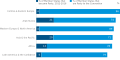
File:Member States by region with a freedom of information law or policy.png|Member States by region with a freedom of information law or policy | File:Member States by region with a freedom of information law or policy.png|Member States by region with a freedom of information law or policy | ||
</gallery> | </gallery> | ||
Latest revision as of 02:57, 9 March 2025
Freedom of Information (FOI) refers to the right to access information held by public bodies. It is a fundamental aspect of a transparent and accountable government, allowing citizens to understand the workings of their government, participate in public life, and hold authorities accountable for their actions. The concept is rooted in the belief that government should be open and transparent to the people it serves.
Overview[edit]
Freedom of Information laws vary by country but generally allow individuals to request documents and data from government bodies without needing to state a reason for their request. These laws also set out the obligations of public bodies to publish certain types of information proactively. While the scope and exemptions to these laws can differ, they all share the common goal of promoting transparency and accountability.
History[edit]
The concept of Freedom of Information can be traced back to the 18th century, with Sweden's Freedom of the Press Act of 1766 often cited as the first example of an FOI law. However, it was not until the 20th century that FOI laws became more widespread, particularly in the latter half. The United States' Freedom of Information Act, enacted in 1966, is one of the most well-known examples and has inspired similar legislation in numerous other countries.
Global Perspective[edit]
As of the early 21st century, over 100 countries have implemented some form of FOI legislation. These laws vary significantly in their effectiveness, with some countries providing broad access to government records and others imposing significant restrictions. International organizations, such as the United Nations and the Organization of American States, have recognized the importance of freedom of information and have encouraged its adoption around the world.
Challenges and Limitations[edit]
Despite the widespread adoption of FOI laws, several challenges limit their effectiveness. These include:
- Exemptions: Most FOI laws contain exemptions to protect interests such as national security, privacy, and commercial confidentiality. However, these exemptions can be overly broad or misused to withhold information.
- Delays and Costs: Requesters often face significant delays in receiving information or may be required to pay excessive fees, which can deter individuals from exercising their rights.
- Lack of Awareness: Many citizens are unaware of their rights under FOI laws or how to make a request, limiting the laws' potential impact.
- Digital Divide: In many regions, the lack of access to digital technology limits the ability of individuals to request and receive information electronically.
Future Directions[edit]
The future of Freedom of Information lies in addressing these challenges and adapting to the digital age. This includes:
- Reducing exemptions and ensuring they are narrowly defined and applied.
- Simplifying the request process and reducing or eliminating fees.
- Increasing public awareness and education on FOI rights.
- Leveraging technology to improve access to information, such as through online portals.
See Also[edit]
-
 Free Speech Flag by John Marcotte
 -
 Member States that are Party to the UN Convention against Corruption
 -
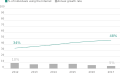 Percentage of individuals using the internet 2012-2017
 -
 Member States by region with a freedom of information law or policy


