Empire of Brazil: Difference between revisions
CSV import |
CSV import |
||
| Line 32: | Line 32: | ||
{{Brazil-stub}} | {{Brazil-stub}} | ||
== Empire of Brazil gallery == | |||
<gallery> | |||
File:Coat of Arms of the Empire of Brazil (1853-1889).svg|Coat of Arms of the Empire of Brazil (1853-1889) | |||
File:Brazil in 1822.svg|Brazil in 1822 | |||
File:Paço imperial 1840.png|Paço imperial 1840 | |||
File:Recife 1851 03.png|Recife 1851 | |||
File:Locomotive in Bahia province 1859.jpg|Locomotive in Bahia province 1859 | |||
File:Construction site in Recife 1862.png|Construction site in Recife 1862 | |||
File:Brazilian artillery 1866.jpg|Brazilian artillery 1866 | |||
File:Procession in Paraguay 1868.png|Procession in Paraguay 1868 | |||
</gallery> | |||
Latest revision as of 17:47, 3 March 2025
Empire of Brazil
The Empire of Brazil was a 19th-century state that encompassed the regions of present-day Brazil and Uruguay. It was established on December 1, 1822, following the declaration of independence by Pedro I from Portugal, and it lasted until the proclamation of the Brazilian Republic on November 15, 1889. The Empire of Brazil was a constitutional monarchy with a parliamentary system, marking a significant period in Brazilian history characterized by economic growth, territorial expansion, and the abolition of slavery.
History[edit]
The history of the Empire of Brazil can be divided into three major periods: the reign of Emperor Pedro I (1822-1831), the regency period (1831-1840), and the reign of Emperor Pedro II (1840-1889).
Reign of Pedro I[edit]
Pedro I's reign was marked by struggles for independence, consolidation of the empire, and conflicts with neighboring countries. The emperor faced opposition from both Portuguese loyalists and Brazilian republicans. The successful conclusion of the Cisplatine War, although resulting in the loss of the Cisplatina province (modern-day Uruguay), helped to solidify Brazil's independence.
Regency Period[edit]
The regency period was a time of internal strife and political instability, characterized by numerous local rebellions. The most significant of these was the Ragamuffin War, which showcased the regional disparities within the empire.
Reign of Pedro II[edit]
The reign of Pedro II brought stability and progress to Brazil. His long tenure saw the modernization of Brazilian society, the end of the slave trade, and the eventual abolition of slavery in 1888 with the Lei Áurea (Golden Law). Pedro II was a popular monarch who fostered the development of education, the arts, and sciences. However, his reign also faced challenges, including the Paraguayan War, which was the deadliest conflict in South American history.
Government and Politics[edit]
The Empire of Brazil was a constitutional monarchy based on the Constitution of 1824, which established four branches of government: the Emperor as the moderator; the executive, led by the Prime Minister; the legislative, composed of the Senate and the Chamber of Deputies; and the judiciary. The political system allowed for a significant degree of participation by the elite, but it was largely exclusive of the lower classes and slaves.
Economy[edit]
During the empire, Brazil's economy was primarily based on agriculture, with coffee and sugar being the main exports. The country also saw the beginnings of industrialization and the development of a more diversified economy in the later years of Pedro II's reign.
Culture[edit]
The Empire of Brazil was a period of cultural flourishing, with significant contributions to literature, music, and the arts. The imperial government sponsored numerous cultural institutions and events, promoting a sense of national identity and pride.
End of the Empire[edit]
The Empire of Brazil came to an end in 1889 with a military coup that established the Brazilian Republic. The monarchy's inability to address issues such as land reform and the concentration of power among the landed elites contributed to its downfall. Emperor Pedro II was deposed and went into exile in Europe, marking the end of the imperial period in Brazilian history.
 | This Brazil-related article is a stub. You can help Wikipedia by adding missing information. |
Empire of Brazil gallery[edit]
-
 Coat of Arms of the Empire of Brazil (1853-1889)
 -
 Brazil in 1822
 -
 Paço imperial 1840
 -
 Recife 1851
 -
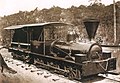 Locomotive in Bahia province 1859
 -
 Construction site in Recife 1862
 -
 Brazilian artillery 1866
 -
 Procession in Paraguay 1868
.svg)


