Cell–cell fusogens: Difference between revisions
CSV import Tags: mobile edit mobile web edit |
CSV import |
||
| Line 28: | Line 28: | ||
{{Medicine-stub}} | {{Medicine-stub}} | ||
== Cell–cell fusogens gallery == | |||
<gallery> | |||
File:Membranous vesicles with integral epithelial fusion failure 1 (EFF-1) or anchor-cell fusion failure 1 (AFF-1) exhibited different morphologies.png|Membranous vesicles with integral epithelial fusion failure 1 (EFF-1) or anchor-cell fusion failure 1 (AFF-1) exhibited different morphologies | |||
</gallery> | |||
Latest revision as of 06:14, 3 March 2025
Cell–cell fusogens are specialized proteins that mediate the fusion of cell membranes, a critical process in many biological functions including fertilization, muscle development, and immune response. These fusogens play a pivotal role in the merging of two separate cell membranes into a single continuous bilayer, allowing for the mixing of cytoplasmic and membrane components between cells. Understanding the mechanisms of cell–cell fusion is essential for insights into developmental biology, tissue repair, and the defense mechanisms of multicellular organisms.
Mechanism[edit]
The exact mechanism of cell–cell fusion varies among different fusogens, but generally involves several key steps: recognition and binding of the fusogen to specific receptors on the target cell membrane, bringing the membranes into close proximity, destabilization of the lipid bilayers, and finally, merging of the membranes and cytoplasmic contents. This process is highly regulated and requires precise coordination to ensure that fusion occurs correctly and at the appropriate time and place within an organism.
Types of Cell–cell Fusogens[edit]
There are several types of cell–cell fusogens, each with specific roles in different biological processes:
- Syncytins: Retroviral envelope proteins that have been co-opted by eukaryotic cells to mediate the fusion of trophoblast cells during the formation of the placenta in mammals.
- Fusogens in Muscle Development: Proteins such as Myomaker and Myomerger/Minnion are involved in the fusion of myoblasts to form multinucleated muscle fibers, a critical step in muscle development and repair.
- Fusogens in the Immune System: Certain fusogens are involved in the formation of multinucleated giant cells (MGCs) during immune responses, aiding in the isolation and destruction of pathogens.
Clinical Significance[edit]
Understanding cell–cell fusogens has significant implications for medical research and treatment. Abnormalities in cell fusion processes can lead to diseases such as muscular dystrophy, where muscle development is impaired, or preeclampsia, a condition related to abnormal placenta formation. Additionally, targeting fusogens has potential in developing therapies for viral infections, cancer, and regenerative medicine.
Research and Future Directions[edit]
Research into cell–cell fusogens is ongoing, with efforts focused on elucidating the detailed mechanisms of action, discovering new fusogens, and understanding their roles in health and disease. Advances in this field could lead to novel therapeutic strategies for a variety of conditions that involve abnormal cell fusion or require targeted fusion processes for treatment.
See Also[edit]

Cell–cell fusogens gallery[edit]
-
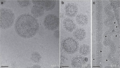 Membranous vesicles with integral epithelial fusion failure 1 (EFF-1) or anchor-cell fusion failure 1 (AFF-1) exhibited different morphologies
_or_anchor-cell_fusion_failure_1_(AFF-1)_exhibited_different_morphologies.png)
