Hedera helix: Difference between revisions
CSV import |
CSV import |
||
| Line 26: | Line 26: | ||
{{Flora-stub}} | {{Flora-stub}} | ||
{{Medicine-stub}} | {{Medicine-stub}} | ||
<gallery> | |||
File:Hedera helix Dover.jpg|Hedera helix Dover | |||
File:Hedera helix1.JPG|Hedera helix 1 | |||
File:Hedera helix 2 beentree bialowieza 2005.jpg|Hedera helix 2 beentree bialowieza 2005 | |||
File:Hedera helix clinging on Platanus x hispanica, Agde, Hérault.jpg|Hedera helix clinging on Platanus x hispanica, Agde, Hérault | |||
File:Entrance to High Castle in Malbork.jpg|Entrance to High Castle in Malbork | |||
File:Starr-071024-9905-Hedera helix-variegated leaves-Enchanting Floral Gardens of Kula-Maui (24895451805).jpg|Hedera helix variegated leaves Enchanting Floral Gardens of Kula Maui | |||
File:English Ivy on Damascus Gate.jpg|English Ivy on Damascus Gate | |||
</gallery> | |||
Latest revision as of 06:09, 3 March 2025
Hedeoma pulegioides, commonly known as American Pennyroyal or Mock Pennyroyal, is a species of Hedeoma that is native to North America. It is a member of the Lamiaceae family, which includes many aromatic herbs such as mint, basil, and rosemary.
Description[edit]
Hedeoma pulegioides is a small, annual herbaceous plant that typically grows to a height of 10-50 cm. The leaves are opposite, simple, and have a strong minty aroma when crushed. The flowers are small, tubular, and pale purple in color. They are typically in bloom from July to September.
Distribution and Habitat[edit]
Hedeoma pulegioides is native to North America, where it is found in the eastern and central regions of the United States and Canada. It typically grows in dry, open habitats such as prairies, fields, and open woodlands.
Uses[edit]
Historically, Hedeoma pulegioides has been used for medicinal purposes by various Native American tribes. The plant has been used as a diaphoretic, diuretic, and carminative. It has also been used to treat ailments such as colds, fevers, and digestive disorders. However, the plant is toxic in large quantities and should be used with caution.
Cultivation[edit]
Hedeoma pulegioides is a hardy plant that can be easily grown in a variety of soil types, as long as they are well-drained. The plant prefers full sun but can tolerate partial shade. It is drought-tolerant and can be propagated by seeds.
Conservation Status[edit]
While Hedeoma pulegioides is not currently listed as threatened or endangered, its habitat is being lost due to urban development and agriculture. Conservation efforts are needed to preserve this species and its habitat.
See Also[edit]

This flora-related article is a stub. You can help WikiMD by expanding it.

-
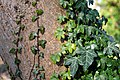 Hedera helix Dover
 -
 Hedera helix 1
 -
 Hedera helix 2 beentree bialowieza 2005
 -
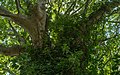 Hedera helix clinging on Platanus x hispanica, Agde, Hérault
 -
 Entrance to High Castle in Malbork
 -
 Hedera helix variegated leaves Enchanting Floral Gardens of Kula Maui
 -
 English Ivy on Damascus Gate


.jpg)

