Subtilisin: Difference between revisions
CSV import Tags: mobile edit mobile web edit |
CSV import |
||
| Line 24: | Line 24: | ||
{{enzyme-stub}} | {{enzyme-stub}} | ||
== Subtilisin gallery == | |||
<gallery> | |||
File:PDB 2pmw EBI.png|PDB 2pmw EBI | |||
File:Crystal structure of Subtilisin - 1st2.png|Crystal structure of Subtilisin - 1st2 | |||
</gallery> | |||
Latest revision as of 06:07, 3 March 2025
Subtilisin is a protease enzyme initially discovered in bacteria belonging to the genus Bacillus. It is a serine protease, meaning it uses a serine residue at its active site to cleave peptide bonds in proteins. Subtilisin is notable for its broad substrate specificity and is used in various industrial and research applications due to its ability to function in harsh conditions, such as high temperatures and alkaline pH levels.
Structure and Mechanism[edit]
Subtilisin is a single polypeptide chain consisting of over 270 amino acid residues. The active site of subtilisin contains a catalytic triad composed of serine, histidine, and aspartate residues. This triad is crucial for the enzyme's catalytic mechanism, which involves the serine residue acting as a nucleophile to attack the carbonyl carbon of the peptide bond, leading to its cleavage.
The enzyme's structure is stabilized by several disulfide bonds, which contribute to its robustness and ability to retain activity under extreme conditions. The stability and activity of subtilisin can be further enhanced through protein engineering, making it a versatile tool in biotechnological applications.
Biological Role and Applications[edit]
In nature, subtilisin-like proteases play a role in the degradation of proteins, facilitating nutrient cycling and the regulation of enzyme levels within the cell. In industrial contexts, subtilisin is used in detergent formulations, where its ability to break down proteins contributes to stain removal. Additionally, it finds applications in the food industry for processes such as meat tenderization and the clarification of beer and juice.
Subtilisin is also used in the laboratory for the synthesis of peptides and the removal of unwanted proteins from samples. Its specificity and efficiency make it a valuable tool in molecular biology and biochemistry for various analytical and preparative purposes.
Safety and Regulation[edit]
While subtilisin is generally considered safe for use in industrial and research applications, it can be an allergen and irritant. Inhalation of subtilisin powders or aerosols can lead to respiratory issues, and skin or eye contact may cause irritation. Consequently, appropriate safety measures, such as the use of personal protective equipment and containment strategies, are recommended when handling subtilisin in powdered form.
Regulatory bodies, including the Environmental Protection Agency (EPA) in the United States, have guidelines and regulations in place for the safe use of subtilisin in commercial products, ensuring that its benefits can be harnessed while minimizing potential risks to human health and the environment.
Research and Future Directions[edit]
Ongoing research into subtilisin focuses on understanding its structure-function relationships, improving its stability and activity through protein engineering, and expanding its range of applications. Advances in genetic engineering and protein design hold promise for the development of subtilisin variants with tailored properties, opening new avenues for its use in biotechnology, medicine, and industry.

Subtilisin gallery[edit]
-
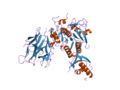 PDB 2pmw EBI
 -
 Crystal structure of Subtilisin - 1st2


