Robbsia andropogonis: Difference between revisions
CSV import |
CSV import |
||
| Line 20: | Line 20: | ||
{{Fungi-stub}} | {{Fungi-stub}} | ||
== Robbsia andropogonis gallery == | |||
<gallery> | |||
File:Pseudomonas andropogonis on Trifolium repens.jpg|Pseudomonas andropogonis on Trifolium repens | |||
</gallery> | |||
Latest revision as of 05:43, 3 March 2025
Robbsia andropogonis is a species of fungus within the genus Robbsia. It is a plant pathogen that specifically targets the Andropogon genus of grasses, which includes several species of significant ecological and agricultural value. The interaction between Robbsia andropogonis and its host plants is of particular interest in the fields of plant pathology and agriculture, as it can have implications for grassland ecosystems and forage production.
Description[edit]
Robbsia andropogonis is characterized by its ability to infect and cause disease in certain species of the Andropogon grasses. The fungus manifests as leaf spots and blight, which can lead to reduced photosynthesis, weakened plants, and, in severe cases, the death of the host plant. The identification of Robbsia andropogonis is typically done through the observation of symptoms on the host plant, followed by microscopic examination of the fungal structures.
Life Cycle[edit]
The life cycle of Robbsia andropogonis involves several stages, including spore germination, penetration of the host tissue, colonization, and reproduction. The fungus reproduces both sexually and asexually, with spores serving as the primary means of dispersal. Environmental conditions such as temperature and humidity play a crucial role in the life cycle of Robbsia andropogonis, influencing its growth rate and the severity of infection in host plants.
Ecology[edit]
Robbsia andropogonis is found in various regions where its host plants, the Andropogon grasses, are native or cultivated. The ecological impact of Robbsia andropogonis is significant, as it can alter grassland dynamics by affecting the health and competitiveness of its host species. Understanding the ecology of Robbsia andropogonis is essential for managing grassland ecosystems and for developing strategies to control the spread of the fungus in agricultural settings.
Management[edit]
Management of Robbsia andropogonis involves a combination of cultural, biological, and chemical strategies. Cultural practices such as crop rotation and the removal of infected plant material can help reduce the inoculum in the environment. Biological control methods, including the use of antagonistic microorganisms, are being explored as a sustainable approach to managing Robbsia andropogonis. Chemical control with fungicides may be necessary in severe cases, but it is important to use these products judiciously to avoid the development of resistance.
Research[edit]
Ongoing research on Robbsia andropogonis focuses on understanding its biology, ecology, and interaction with host plants. Studies aim to identify resistant Andropogon varieties, develop effective management strategies, and explore the potential impacts of climate change on the distribution and severity of Robbsia andropogonis infections. Research findings contribute to the broader knowledge of plant-fungal interactions and have practical applications in agriculture and ecosystem management.

Robbsia andropogonis gallery[edit]
-
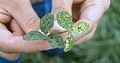 Pseudomonas andropogonis on Trifolium repens

