Heaviside condition: Difference between revisions
CSV import Tags: mobile edit mobile web edit |
CSV import |
||
| Line 33: | Line 33: | ||
{{Telecommunications-stub}} | {{Telecommunications-stub}} | ||
{{medicine-stub}} | {{medicine-stub}} | ||
== Heaviside condition gallery == | |||
<gallery> | |||
File:Line model Heaviside.svg|Line model Heaviside | |||
File:Mu-metal cable.svg|Mu-metal cable | |||
File:Typical Good Transmission Line Parameter Ratioes.png|Typical Good Transmission Line Parameter Ratios | |||
</gallery> | |||
Latest revision as of 05:38, 3 March 2025
Heaviside Condition refers to a criterion used in the field of electrical engineering and mathematics, particularly in the analysis of transmission lines and the design of filters. Named after the British engineer and physicist Oliver Heaviside, who made significant contributions to the mathematical techniques for solving differential equations, this condition is crucial for ensuring that signals can propagate through a system without distortion.
Overview[edit]
The Heaviside condition, also known as the distortionless condition, is a set of criteria that, when met, allow a transmission line to transmit signals without any distortion. This means that the shape of the signal at the output of the line will be the same as the shape at the input, albeit with possible changes in amplitude and phase. The condition is particularly important in the design of telecommunication systems, where signal integrity is paramount.
Mathematical Formulation[edit]
The Heaviside condition can be mathematically expressed in terms of the parameters of a transmission line: the resistance per unit length (R), the inductance per unit length (L), the capacitance per unit length (C), and the conductance per unit length (G). The condition states that for a transmission line to be distortionless, the following relationship must be satisfied:
\[ \frac{R}{L} = \frac{G}{C} \]
This equation implies that the ratio of resistance to inductance in the line must equal the ratio of conductance to capacitance. When this condition is met, the line is said to be distortionless because it ensures that the attenuation and phase shift per unit length are constant across all frequencies, thereby allowing the signal to maintain its shape over distance.
Implications[edit]
The implications of the Heaviside condition are significant in the design and operation of telecommunication networks and systems. By ensuring that transmission lines meet this condition, engineers can design systems that are capable of transmitting signals with high fidelity over long distances. This is particularly important in applications such as telephone networks, internet infrastructure, and broadcast systems.
Limitations[edit]
While the Heaviside condition provides a theoretical foundation for the design of distortionless transmission lines, in practice, it is often difficult to achieve perfectly distortionless transmission. Real-world materials and engineering constraints mean that some level of distortion is almost always present. However, understanding and applying the Heaviside condition can help minimize this distortion to acceptable levels.
See Also[edit]
This electrical engineering related article is a stub.

This article is a mathematics-related stub. You can help WikiMD by expanding it!


Heaviside condition gallery[edit]
-
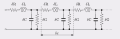 Line model Heaviside
 -
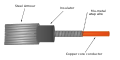 Mu-metal cable
 -
 Typical Good Transmission Line Parameter Ratios


