Cyrillic script: Difference between revisions
CSV import |
CSV import |
||
| Line 26: | Line 26: | ||
[[Category:Alphabets]] | [[Category:Alphabets]] | ||
{{stub}} | {{stub}} | ||
==Cyrillic script== | |||
<gallery> | |||
File:Biblioteca Apostolica Vaticana p169 Serbian Alphabet Serbian Language Serbian Literatue Saint Cyril and Metodius Illyrian 2 pages.png|Biblioteca Apostolica Vaticana p169 Serbian Alphabet Serbian Language Serbian Literature Saint Cyril and Methodius Illyrian 2 pages | |||
File:Krepchanski manastir.jpg|Krepchanski manastir | |||
File:Azbuka 1574 by Ivan Fyodorov v3.png|Azbuka 1574 by Ivan Fyodorov v3 | |||
File:Archive-ugent-be-973E9242-B062-11E1-9EF1-99BDAAF23FF7 DS-375 (cropped).jpg|Archive ugent be 973E9242 B062 11E1 9EF1 99BDAAF23FF7 DS 375 (cropped) | |||
File:Meletius Smotrisky Cyrillic Alphabet.PNG|Meletius Smotrisky Cyrillic Alphabet | |||
File:Cyrillic upright-cursive-n.svg|Cyrillic upright cursive n | |||
File:Cyrillic alternates.svg|Cyrillic alternates | |||
File:Cyrillic cursive.svg|Cyrillic cursive | |||
File:Special Cyrillics BGDPT.svg|Special Cyrillics BGDPT | |||
File:Cyrillic-italics-nonitalics.png|Cyrillic italics nonitalics | |||
</gallery> | |||
Latest revision as of 05:35, 3 March 2025
Cyrillic script is a writing system used for various languages across Eastern Europe and north and central Asia. It is based on the Early Cyrillic, which was developed during the First Bulgarian Empire in the 9th century AD at the Preslav Literary School. It is the basis of alphabets used in various languages, past and present, in parts of southeastern Europe and northern Eurasia, especially those of Slavic origin, and non-Slavic languages influenced by Russian.
History[edit]
The Cyrillic script was created in the First Bulgarian Empire and is a derivative of the Greek uncial script, with some letters from the older Glagolitic alphabet for sounds not found in Greek. Tradition holds that it was formalized by Saints Cyril and Methodius who brought Christianity to the southern Slavs, hence the name Cyrillic.
Modern usage[edit]
Today, the Cyrillic script is used for many languages, including Russian, Ukrainian, Bulgarian, Serbian, and many others. The script has been adapted to non-Slavic languages, and has been used in Mongolia, the Caucasus, Central Asia, and the Arctic.
Characteristics[edit]
The Cyrillic script is a type of alphabet where each symbol generally represents a single sound or phoneme. The script is named after the medieval Greek Christian missionaries Saints Cyril and Methodius, who are credited with its creation.
Variations[edit]
There are many variations of the Cyrillic script depending on the language it is being used for. These variations may include additional letters and symbols, or letters not found in the standard Cyrillic alphabet.
See also[edit]
References[edit]
<references />
 | |
|---|---|
 |
 |
Cyrillic script[edit]
-
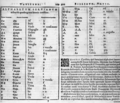 Biblioteca Apostolica Vaticana p169 Serbian Alphabet Serbian Language Serbian Literature Saint Cyril and Methodius Illyrian 2 pages
 -
 Krepchanski manastir
 -
 Azbuka 1574 by Ivan Fyodorov v3
 -
 Archive ugent be 973E9242 B062 11E1 9EF1 99BDAAF23FF7 DS 375 (cropped)
 -
 Meletius Smotrisky Cyrillic Alphabet
 -
 Cyrillic upright cursive n
 -
 Cyrillic alternates
 -
 Cyrillic cursive
 -
 Special Cyrillics BGDPT
 -
 Cyrillic italics nonitalics


.jpg)


