NFL draft: Difference between revisions
CSV import |
CSV import |
||
| Line 34: | Line 34: | ||
[[Category:Annual sporting events in the United States]] | [[Category:Annual sporting events in the United States]] | ||
{{football-stub}} | {{football-stub}} | ||
<gallery> | |||
File:NFL Draft logo.svg|NFL Draft logo | |||
File:Commissioner Goodell at the 2010 NFL Draft podium.jpg|Commissioner Goodell at the 2010 NFL Draft podium | |||
File:NFL Draft Chicago 2016 06.JPG|NFL Draft Chicago 2016 | |||
File:NFL Draft 2010 set at Radio City Music Hall.jpg|NFL Draft 2010 set at Radio City Music Hall | |||
File:2017 NFL Draft stage.jpg|2017 NFL Draft stage | |||
</gallery> | |||
Latest revision as of 05:33, 3 March 2025
The NFL Draft is an annual event in which the National Football League (NFL) teams select eligible college football players to add to their rosters. It serves as the primary source of player recruitment for the league. The draft has become an integral part of NFL strategy and culture, influencing team decisions and fan engagement.
History[edit]
The NFL Draft was first held in 1936, with the aim of creating a fair system for the distribution of newly eligible players to NFL teams. The draft was introduced to prevent wealthier teams from monopolizing the signing of all the top players coming out of college. Over the decades, the draft has evolved in terms of rules, format, and public interest.
Process[edit]
The draft consists of seven rounds, with each of the 32 teams in the league getting one pick in each round. The order of selection is determined by the reverse order of finish in the previous season's standings, meaning that the team with the worst record picks first. This system is designed to promote parity by allowing weaker teams to improve by acquiring better players.
Eligibility[edit]
To be eligible for the draft, players must be out of high school for at least three years and must have used up their college eligibility before the start of the next college football season. Underclassmen that have met these criteria can declare for the draft early by renouncing their remaining college eligibility.
Draft Combine[edit]
Prior to the draft, a scouting combine is held where invited draft prospects undergo physical and mental tests in front of NFL coaches, general managers, and scouts. The combine is a significant part of the pre-draft process, as it provides a centralized evaluation opportunity for all teams.
Impact[edit]
The NFL Draft has a significant impact on the teams' fortunes, shaping their rosters for the upcoming seasons. It also has a large cultural impact, with extensive media coverage and public interest. Draft day trades and selections can lead to immediate shifts in team strategies and fan expectations.
Notable Drafts[edit]
Some drafts have been particularly notable due to the players selected or the trades that took place. For example, the 1983 NFL Draft saw six quarterbacks taken in the first round, including Hall of Famers John Elway, Dan Marino, and Jim Kelly.
Media Coverage[edit]
The draft is televised and has become a major event on the sports calendar, drawing large television audiences. It is covered extensively by sports networks, with analysts discussing each pick and predicting future impacts on the teams.
Criticism and Controversies[edit]
The draft process has faced criticism over the years, including debates over the fairness of the drafting system, the pressure and scrutiny placed on young athletes, and the extensive media coverage that can affect their careers.
See Also[edit]
-
NFL Draft logo
-
 Commissioner Goodell at the 2010 NFL Draft podium
 -
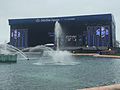 NFL Draft Chicago 2016
 -
 NFL Draft 2010 set at Radio City Music Hall
 -
 2017 NFL Draft stage


