Barcode: Difference between revisions
CSV import |
CSV import |
||
| Line 31: | Line 31: | ||
{{technology-stub}} | {{technology-stub}} | ||
{{medicine-stub}} | {{medicine-stub}} | ||
== Barcode gallery == | |||
<gallery> | |||
File:UPC-A-036000291452.svg|UPC-A 036000291452 | |||
File:Barcodes on British Railways rolling stock in 1962 (Modern Railways Dec 1962) 000130.jpg|Barcodes on British Railways rolling stock in 1962 | |||
File:Snack vendor on the Shinkansen. 2005 (26321781190).jpg|Snack vendor on the Shinkansen, 2005 | |||
File:EAN-13-ISBN-13.svg|EAN-13 ISBN-13 | |||
File:LB2-ADULT-L3 Assembled.jpg|LB2-ADULT-L3 Assembled | |||
File:Barcodedmail.JPG|Barcoded mail | |||
File:GTIN Barcodes of coke bottles - what you see and what the barcode scanner see 2 IMG 2908 2913 2919.JPG|GTIN Barcodes of coke bottles | |||
File:Codabar.svg|Codabar | |||
File:Barcode2of5example.svg|Barcode 2 of 5 example | |||
File:Code11 barcode.png|Code 11 barcode | |||
</gallery> | |||
Latest revision as of 05:25, 3 March 2025
Barcode is a method of representing data in a visual, machine-readable form. Initially, barcodes represented data by varying the widths and spacings of parallel lines. These barcodes, now commonly referred to as linear or one-dimensional (1D), can be scanned by special optical scanners, called barcode readers.
History[edit]
The concept of the barcode originated in the 1940s as a means of tracking the movement of railroad cars. The first patent for a barcode type product (US Patent #2,612,994) was issued to inventors Joseph Woodland and Bernard Silver on October 7, 1952.
Types of Barcodes[edit]
There are two types of barcodes: linear – or 1D, and 2D. Most people are familiar with the linear, or 1D barcodes that appear on everything from food items to concert tickets. These barcodes represent data with varying widths and spacings between parallel lines.
2D barcodes are a bit more complex. They use rectangles, dots, hexagons, and other geometric patterns to represent data. QR codes, a type of 2D barcode, have become particularly popular due to their ability to be scanned with a smartphone.
Uses[edit]
Barcodes are used in various fields, including retail, warehousing, and healthcare. In healthcare, barcodes can be used to identify patients, track medication, and ensure patient safety. In retail, they are used for inventory management and pricing. In warehousing, barcodes are used to track inventory levels and locations.
Barcode Scanners[edit]
A barcode scanner is an electronic device that can read and output printed barcodes to a computer. It consists of a light source, a lens and a light sensor translating optical impulses into electrical ones.
Barcode in Healthcare[edit]
In the healthcare sector, barcodes play a crucial role in ensuring patient safety and improving efficiency. They are used in patient identification, medication management, and specimen collection, among other things.
See Also[edit]
References[edit]
<references />
This article is a technology-related stub. You can help WikiMD by expanding it!

Barcode gallery[edit]
-
 UPC-A 036000291452
 -
 Barcodes on British Railways rolling stock in 1962
 -
 Snack vendor on the Shinkansen, 2005
 -
 EAN-13 ISBN-13
 -
LB2-ADULT-L3 Assembled
-
 Barcoded mail
 -
 GTIN Barcodes of coke bottles
 -
Codabar
-
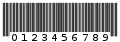 Barcode 2 of 5 example
 -
Code 11 barcode

_000130.jpg)
.jpg)


