Red-light district: Difference between revisions
CSV import |
CSV import |
||
| Line 26: | Line 26: | ||
[[Category:Prostitution]] | [[Category:Prostitution]] | ||
{{sociology-stub}} | {{sociology-stub}} | ||
== Red-light district gallery == | |||
<gallery> | |||
File:Red-light district of Amsterdam by day. 2012.JPG|Red-light district of Amsterdam by day | |||
File:Sex worker statue Oudekerksplein Amsterdam.jpg|Sex worker statue Oudekerksplein Amsterdam | |||
File:JudgeMagazine12Jan1901.jpg|Judge Magazine 12 Jan 1901 | |||
File:Prostitution laws of the world2.svg|Prostitution laws of the world | |||
File:Red Light District.jpg|Red Light District | |||
File:Reeperbahn at dawn.jpg|Reeperbahn at dawn | |||
File:Soi Cowboy - Bangkok.jpg|Soi Cowboy - Bangkok | |||
File:RedLightDistrictAmsterdamBloedstraat.jpg|Red Light District Amsterdam Bloedstraat | |||
File:Aarschotstraat.jpg|Aarschotstraat | |||
File:Kabukicho-Sinjyuku-Tokyo.JPG|Kabukicho Sinjyuku Tokyo | |||
</gallery> | |||
Latest revision as of 05:22, 3 March 2025
Red-light district is a term used to describe an area or neighborhood where prostitution and other businesses in the sex industry are concentrated. The term originates from the red lights that were used as signs for brothels.
History[edit]
The concept of a red-light district dates back to the Middle Ages. In many European cities, certain areas were designated for brothels. The term "red-light district" itself is believed to have originated in the United States in the late 19th century, particularly in areas associated with the railroad industry where brothels were often located near railway stations.
Legal status[edit]
The legal status of red-light districts varies greatly around the world. In some countries, such as the Netherlands and Germany, prostitution is legal and regulated, and red-light districts are recognized and protected by the government. In other countries, such as the United States, prostitution is illegal in most areas, but red-light districts still exist in a semi-underground capacity.
Notable red-light districts[edit]
Some of the most famous red-light districts around the world include De Wallen in Amsterdam, Reeperbahn in Hamburg, and Pigalle in Paris. These districts are often popular tourist destinations due to their historical and cultural significance.
Social and health issues[edit]
Red-light districts are often associated with a number of social and health issues, including drug addiction, crime, and the spread of sexually transmitted diseases. Many advocates for sex workers argue that the decriminalization and regulation of the sex industry can help to address these issues.
See also[edit]

Red-light district gallery[edit]
-
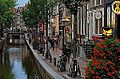 Red-light district of Amsterdam by day
 -
 Sex worker statue Oudekerksplein Amsterdam
 -
 Judge Magazine 12 Jan 1901
 -
 Prostitution laws of the world
 -
 Red Light District
 -
 Reeperbahn at dawn
 -
 Soi Cowboy - Bangkok
 -
 Red Light District Amsterdam Bloedstraat
 -
 Aarschotstraat
 -
 Kabukicho Sinjyuku Tokyo


