Quadrupole ion trap: Difference between revisions
CSV import Tags: mobile edit mobile web edit |
CSV import |
||
| Line 34: | Line 34: | ||
{{Chemistry-stub}} | {{Chemistry-stub}} | ||
{{Physics-stub}} | {{Physics-stub}} | ||
== Quadrupole ion trap gallery == | |||
<gallery> | |||
File:Paul-Trap.svg|Paul Trap | |||
File:Paul quadrupole trap.jpg|Paul quadrupole trap | |||
File:lin quad thompson ucalgary.JPG|Linear quadrupole Thompson UCalgary | |||
File:Mass selective instability.gif|Mass selective instability | |||
File:lin quad Ian Nygren.jpg|Linear quadrupole Ian Nygren | |||
File:Micromotion.png|Micromotion | |||
File:LTQ (Linear trap quadrupole).jpg|LTQ (Linear trap quadrupole) | |||
File:Model of CIT.png|Model of CIT | |||
</gallery> | |||
Revision as of 05:18, 3 March 2025
Quadrupole Ion Trap
A quadrupole ion trap is a type of mass spectrometer that uses a combination of electric or magnetic fields to trap charged particles, or ions, in a defined space. The device is essential in the field of mass spectrometry, where it is used for isolating, manipulating, and analyzing ions based on their mass-to-charge ratio (m/z). The quadrupole ion trap has applications in various scientific disciplines, including analytical chemistry, biochemistry, and physics.
Principle of Operation
The quadrupole ion trap operates on the principle of dynamic fields to trap ions. It consists of a ring electrode and two endcap electrodes, forming a three-dimensional quadrupole field. By applying a combination of radio frequency (RF) and direct current (DC) voltages to these electrodes, a trapping potential is created. Ions are trapped in this potential well and can be manipulated by adjusting the RF and DC voltages. The Mathieu equation describes the motion of ions in the quadrupole field, predicting stable and unstable ion trajectories.
History
The concept of the quadrupole ion trap was first introduced by Wolfgang Paul and Helmut Steinwedel in 1953. Wolfgang Paul was later awarded the Nobel Prize in Physics in 1989 for his work on the quadrupole ion trap. Since its inception, the technology has evolved, leading to the development of various types of ion traps, including the linear ion trap and the 3D ion trap.
Applications
Quadrupole ion traps are widely used in mass spectrometry for the analysis of complex chemical and biological samples. They are particularly useful for:
- Tandem mass spectrometry (MS/MS), where ions are selected, fragmented, and analyzed for structural elucidation.
- Proteomics, for the identification and quantification of proteins in biological samples.
- Environmental analysis, for the detection and quantification of pollutants and contaminants.
- Pharmaceutical analysis, for drug development and quality control.
Advantages and Limitations
The quadrupole ion trap offers several advantages, including high sensitivity, the ability to perform MS/MS experiments, and a compact size. However, it also has limitations, such as a limited mass range and challenges in quantification due to space charge effects.
Recent Developments
Recent advancements in quadrupole ion trap technology include the development of high-capacity traps, improved detection methods, and hybrid instruments that combine the quadrupole ion trap with other mass analyzers, such as time-of-flight (TOF) mass spectrometers. These developments have expanded the capabilities and applications of quadrupole ion traps in mass spectrometry.
See Also


Quadrupole ion trap gallery
-
 Paul Trap
 -
 Paul quadrupole trap
 -
 Linear quadrupole Thompson UCalgary
 -
 Mass selective instability
 -
Linear quadrupole Ian Nygren
-
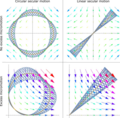 Micromotion
 -
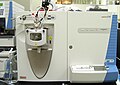 LTQ (Linear trap quadrupole)
 -
 Model of CIT


.jpg)


