Quagga: Difference between revisions
CSV import Tags: mobile edit mobile web edit |
CSV import |
||
| Line 20: | Line 20: | ||
[[Category:Fauna of South Africa]] | [[Category:Fauna of South Africa]] | ||
{{Extinct-stub}} | {{Extinct-stub}} | ||
<gallery> | |||
File:Quagga photo.jpg|Quagga photo | |||
File:Daniell Quagga.jpg|Daniell Quagga | |||
File:Berlin Quagga.jpg|Berlin Quagga | |||
File:Bamberg Naturkundemuseum Quagga 17RM1912.jpg|Bamberg Naturkundemuseum Quagga | |||
File:Equus quagga quagga12.JPG|Equus quagga quagga | |||
File:Quagga Naturhistorisches Museum Basel 27102013 3.jpg|Quagga Naturhistorisches Museum Basel | |||
File:Quagga in enclosure.jpg|Quagga in enclosure | |||
File:Live London quagga.jpg|Live London quagga | |||
File:Quagga London Zoo.jpg|Quagga London Zoo | |||
File:Fourth known quagga photo.jpg|Fourth known quagga photo | |||
</gallery> | |||
Latest revision as of 05:07, 3 March 2025
Quagga (Equus quagga quagga) was a subspecies of plains zebra that lived in South Africa until being hunted to extinction in the late 19th century. The quagga was distinguished from other zebras by its limited pattern of primarily brown and white stripes, which were mainly found on the front part of its body, fading into a solid brown on the hindquarters.
Description[edit]
The quagga was approximately 2.5 meters in length and stood about 1.3 meters tall at the shoulder. Its unique coloration made it easily distinguishable from other zebra species and subspecies. The front part of its body bore the zebra's distinctive stripes, but these faded into a solid brown on the back half of its body, including the hind legs. The quagga's mane was short and erect, similar to that of other zebras.
Distribution and Habitat[edit]
Quaggas were found in great numbers in the Karoo and the southern parts of the Free State in South Africa. Their preferred habitats were arid plains and grasslands where they grazed on grasses and herbs.
Extinction[edit]
The primary cause of the quagga's extinction was overhunting by European settlers. They were hunted for their meat and hides, and also because they were seen as competitors for grazing land with domestic livestock. The last known wild quagga died in 1883, and the last captive quagga died in Amsterdam Zoo on August 12, 1883. The quagga was the first extinct animal to have its DNA analyzed, which has led to discussions about potentially bringing the subspecies back through selective breeding of plains zebra individuals that exhibit quagga-like characteristics, a process known as breeding back.
Conservation and Breeding Back[edit]
The Quagga Project, initiated in South Africa in 1987, aims to selectively breed plains zebras to recreate the physical appearance and characteristics of the extinct quagga. This project has sparked debate about the ethics and feasibility of "resurrecting" extinct species.
In Culture[edit]
The quagga has been featured in literature and art, often symbolizing the tragic consequences of human impact on wildlife. It serves as a poignant reminder of the importance of conservation efforts to prevent further extinctions.
This extinct-related article is a stub. You can help WikiMD by expanding it.
-
 Quagga photo
 -
 Daniell Quagga
 -
 Berlin Quagga
 -
 Bamberg Naturkundemuseum Quagga
 -
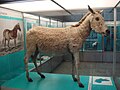 Equus quagga quagga
 -
 Quagga Naturhistorisches Museum Basel
 -
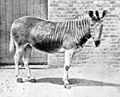 Quagga in enclosure
 -
 Live London quagga
 -
 Quagga London Zoo
 -
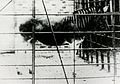 Fourth known quagga photo


