Resupination: Difference between revisions
CSV import Tags: mobile edit mobile web edit |
CSV import |
||
| Line 22: | Line 22: | ||
{{Medicine-stub}} | {{Medicine-stub}} | ||
== Resupination gallery == | |||
<gallery> | |||
File:Diuris aequalis (labelled).jpg|Diuris aequalis | |||
File:Prasophyllum (labelled 2).jpg|Prasophyllum | |||
File:Cattleya aclandiae Orchi 01.jpg|Cattleya aclandiae | |||
File:Calopogon.web.jpg|Calopogon | |||
File:Alstroemeria cv03.jpg|Alstroemeria | |||
File:Dicliptera cernua 1DS-II 1-7697.jpg|Dicliptera cernua | |||
File:Hypoestes aristata 1DS-II 3-0719.jpg|Hypoestes aristata | |||
File:Peniophora-quercina-Crust-fungus-20110225a.JPG|Peniophora quercina | |||
File:Hyphodontia sambuci Eglinton.JPG|Hyphodontia sambuci | |||
</gallery> | |||
Latest revision as of 04:59, 3 March 2025
Resupination is a term used in various fields, including anatomy, botany, and physical therapy, to describe a specific rotational movement or orientation. This article focuses on the concept of resupination across these disciplines, highlighting its significance and applications.
Anatomy[edit]
In anatomy, resupination refers to the outward rotation of the forearm or foot, resulting in the palm or sole facing upwards or forwards, respectively. This movement is opposite to pronation, where the palm or sole is turned downwards or backwards. Resupination of the forearm is achieved through the coordinated action of the supinator muscle and the biceps brachii muscle, while foot resupination involves complex movements of the ankle and subtalar joint.
Botany[edit]
In botany, resupination describes the rotation of flower parts, particularly the ovary or pedicel, resulting in a change of orientation. This is commonly observed in orchids (Orchidaceae) and some other plant families, where the flower twists during development, positioning the labellum (a specialized petal) at the lowermost point to facilitate pollination by insects. Resupination in plants is a critical adaptation for attracting pollinators and ensuring successful reproduction.
Physical Therapy[edit]
In the context of physical therapy, resupination refers to corrective movements or exercises aimed at restoring the natural orientation and function of the forearm or foot, especially following injury or in conditions characterized by excessive pronation. Therapeutic interventions may include strengthening exercises, manual therapy, and the use of orthotic devices to support and gradually correct the alignment of the affected limb.
Clinical Significance[edit]
Abnormalities in resupination, such as restricted movement or excessive resupination, can lead to various musculoskeletal issues. In the forearm, limitations in resupination and pronation can affect hand function, impacting daily activities and occupational tasks. In the foot, abnormal resupination can contribute to biomechanical imbalances, increasing the risk of injuries and conditions like plantar fasciitis and ankle sprains.
Treatment and Management[edit]
Management of resupination abnormalities typically involves a combination of physical therapy, exercise, and, in some cases, surgical intervention. The goal is to improve mobility, strength, and function while addressing any underlying causes of the abnormal movement pattern. Custom orthotics may also be prescribed to support proper foot alignment and distribute pressure evenly during walking or running.

Resupination gallery[edit]
-
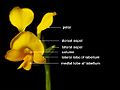 Diuris aequalis
 -
 Prasophyllum
 -
 Cattleya aclandiae
 -
 Calopogon
 -
 Alstroemeria
 -
 Dicliptera cernua
 -
 Hypoestes aristata
 -
 Peniophora quercina
 -
 Hyphodontia sambuci
.jpg)
.jpg)


