Mesocarnivore: Difference between revisions
CSV import Tags: mobile edit mobile web edit |
CSV import |
||
| Line 23: | Line 23: | ||
{{Animal-stub}} | {{Animal-stub}} | ||
{{food-stub}} | {{food-stub}} | ||
== Mesocarnivore == | |||
<gallery> | |||
File:Renardrouxcampagnol.jpg|Renard roux campagnol | |||
File:Rhynchippus_equinus_-_upper_palate_and_dentition_-_Sarmiento_Formation,_Argentina.jpg|Rhynchippus equinus - upper palate and dentition - Sarmiento Formation, Argentina | |||
File:California_Death_Valley_Coyote.jpg|California Death Valley Coyote | |||
File:River_Otter_(Lontra_canadensis).jpg|River Otter (Lontra canadensis) | |||
File:Banded_mongoose_(Mungos_mungo).jpg|Banded mongoose (Mungos mungo) | |||
File:Red_fox_image.jpg|Red fox image | |||
File:Striped_Skunk_(cropped).jpg|Striped Skunk | |||
</gallery> | |||
Latest revision as of 02:13, 27 February 2025
Mesocarnivore is a term used in the field of ecology to describe animals that have a diet composed of 50-70% meat, with the balance consisting of non-vertebrate foods such as fruits, fungi, and other plant material. Mesocarnivores are typically small to medium-sized mammals, but the term can also apply to some birds and reptiles.
Characteristics[edit]
Mesocarnivores are distinguished from hypercarnivores, which have a diet of more than 70% meat, and hypocarnivores, which have a diet of less than 30% meat. They are typically generalist feeders, able to adapt their diet based on the availability of food sources in their environment.
Mesocarnivores include a wide range of species, including but not limited to, raccoons, skunks, coyotes, foxes, and some species of birds of prey. They play a crucial role in ecosystems by controlling populations of smaller animals and insects, and by dispersing seeds through their consumption of fruits and other plant material.
Role in Ecosystems[edit]
Mesocarnivores play a vital role in maintaining the balance of ecosystems. They often occupy the middle of the food chain, preying on smaller animals and insects while also serving as prey for larger carnivores. This position helps to control populations and maintain biodiversity.
In addition to their role in the food chain, mesocarnivores also contribute to seed dispersal. Many mesocarnivores consume fruits and other plant material, and the seeds from these plants are often dispersed in their droppings. This helps to promote plant diversity and regeneration in many ecosystems.
Threats and Conservation[edit]
Like many animals, mesocarnivores face threats from habitat loss, pollution, and climate change. Conservation efforts for mesocarnivores often focus on preserving their habitats and mitigating the impacts of human activity.

.png)

Mesocarnivore[edit]
-
 Renard roux campagnol
 -
 Rhynchippus equinus - upper palate and dentition - Sarmiento Formation, Argentina
 -
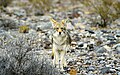 California Death Valley Coyote
 -
 River Otter (Lontra canadensis)
 -
 Banded mongoose (Mungos mungo)
 -
 Red fox image
 -
 Striped Skunk


.jpg)
.jpg)

.jpg)
