Wildfire suppression: Difference between revisions
CSV import |
CSV import |
||
| Line 40: | Line 40: | ||
[[Category:Environmental science]] | [[Category:Environmental science]] | ||
{{Fire-stub}} | {{Fire-stub}} | ||
<gallery> | |||
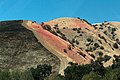
File:Lava_wildfire.JPG|Lava wildfire | |||
File:Tumbleweed_Fire,_Los_Angeles_County_2021,_Part_9.JPG|Tumbleweed Fire, Los Angeles County 2021 | |||
File:Helicoptere_bombardier_d_eau_Italie.jpg|Helicopter water bomber, Italy | |||
File:Fireplow0179.JPG|Fireplow | |||
File:Watertender01.jpg|Water tender | |||
</gallery> | |||
Latest revision as of 02:13, 27 February 2025
Wildfire suppression refers to the tactical methods and strategies used to control and extinguish wildfires. It involves a range of activities, including firefighting, controlled burning, and the creation of firebreaks to prevent the spread of fire.
History[edit]
The history of wildfire suppression dates back to ancient times. Early humans would use simple tools and methods to control fires, such as beating the flames with branches or throwing dirt or water on the fire. In the 20th century, the development of modern firefighting equipment and techniques greatly improved the effectiveness of wildfire suppression.
Techniques[edit]
There are several techniques used in wildfire suppression.
Direct Attack[edit]
In a direct attack, firefighters work along the fire's edge, spraying water or other fire retardants directly onto the flames. This is often the most effective method for controlling small, low-intensity fires.
Indirect Attack[edit]
In an indirect attack, firefighters create firebreaks or use controlled burns to remove the fuel that a fire needs to spread. This can be more effective for large, high-intensity fires, but it also requires more resources and planning.
Aerial Suppression[edit]
Aerial suppression involves the use of aircraft to drop water or fire retardants onto a fire. This can be particularly effective in areas that are difficult to reach by ground.
Equipment[edit]
A variety of equipment is used in wildfire suppression, including fire engines, water tenders, and firefighting aircraft. Firefighters also use personal protective equipment, such as fire-resistant clothing, helmets, and breathing apparatus.
Challenges[edit]
Wildfire suppression faces several challenges. These include the increasing frequency and intensity of wildfires due to climate change, the expansion of human settlements into fire-prone areas, and the high cost of firefighting resources and equipment.
See also[edit]

-
 Lava wildfire
 -
 Tumbleweed Fire, Los Angeles County 2021
 -
 Helicopter water bomber, Italy
 -
 Fireplow
 -
 Water tender


