Biopython: Difference between revisions
CSV import Tags: mobile edit mobile web edit |
CSV import |
||
| Line 55: | Line 55: | ||
{{medicine-stub}} | {{medicine-stub}} | ||
== Biopython == | |||
<gallery> | |||
File:Phylo.draw.png|Phylo draw | |||
File:Phylo.draw_graphviz.png|Phylo draw graphviz | |||
File:PKPS77.png|PKPS77 | |||
</gallery> | |||
Latest revision as of 21:06, 25 February 2025
Biopython is an open-source collection of Python tools for computational biology and bioinformatics. It provides capabilities to work with DNA, RNA, and protein sequences, perform sequence alignments, search bioinformatics databases, and more. Biopython aims to make it easier for Python programmers to use bioinformatics algorithms and data structures.
Overview[edit]
Biopython is part of the larger ecosystem of scientific computing tools in Python, which includes libraries such as NumPy, SciPy, and Matplotlib. It is developed by an international team of developers and is freely available under the Biopython License Agreement, which is similar to the MIT License.
The project was started in 1999 by Jeff Chang, Andrew Dalke, and others. Since then, it has grown to include contributions from many individuals around the world. Biopython is designed to be easy to use and accessible for beginners, yet powerful enough for experienced researchers in the field.
Features[edit]
Biopython includes modules for reading and writing different sequence file formats, including FASTA, GenBank, and others. It also provides tools for sequence analysis, such as calculating nucleotide composition, sequence alignments, and searching for motifs. Additionally, Biopython integrates with online resources such as NCBI's Entrez databases, allowing users to query and download biological data programmatically.
Sequence Objects[edit]
At the core of Biopython is the `Seq` object, which represents a sequence of nucleotides or amino acids. This object comes with methods for common operations, such as reverse complementation, transcription, and translation.
Bioinformatics Databases[edit]
Biopython provides interfaces to various bioinformatics databases through the `Bio.Entrez` and `Bio.Blast` modules. These modules allow users to programmatically access the NCBI databases, perform BLAST searches, and parse the results.
Phylogenetics[edit]
The `Bio.Phylo` module supports working with phylogenetic trees, including reading, writing, and visualizing trees in various formats.
Installation[edit]
Biopython can be installed using pip, the Python package manager:
``` pip install biopython ```
This command will download and install the latest version of Biopython and its dependencies.
Examples[edit]
Here is a simple example of using Biopython to calculate the GC content of a DNA sequence:
```python from Bio.Seq import Seq
my_seq = Seq("AGTACACTGGT") gc_content = 100 * float(my_seq.count("G") + my_seq.count("C")) / len(my_seq) print("GC Content:", gc_content) ```
Community and Contributions[edit]
Biopython has a vibrant community of users and developers. Contributions are welcome, whether they are bug reports, code patches, documentation improvements, or new features. The project's source code is hosted on GitHub, where users can submit pull requests or report issues.
See Also[edit]
External Links[edit]
- [Official Biopython Website](http://biopython.org)
- [Biopython GitHub Repository](https://github.com/biopython/biopython)

Biopython[edit]
-
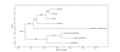 Phylo draw
 -
 Phylo draw graphviz
 -
PKPS77


